

“We are here, we bake, we eat, and we celebrate” — The Story Wrapped in Gaza’s Dates
 佐藤慧
佐藤慧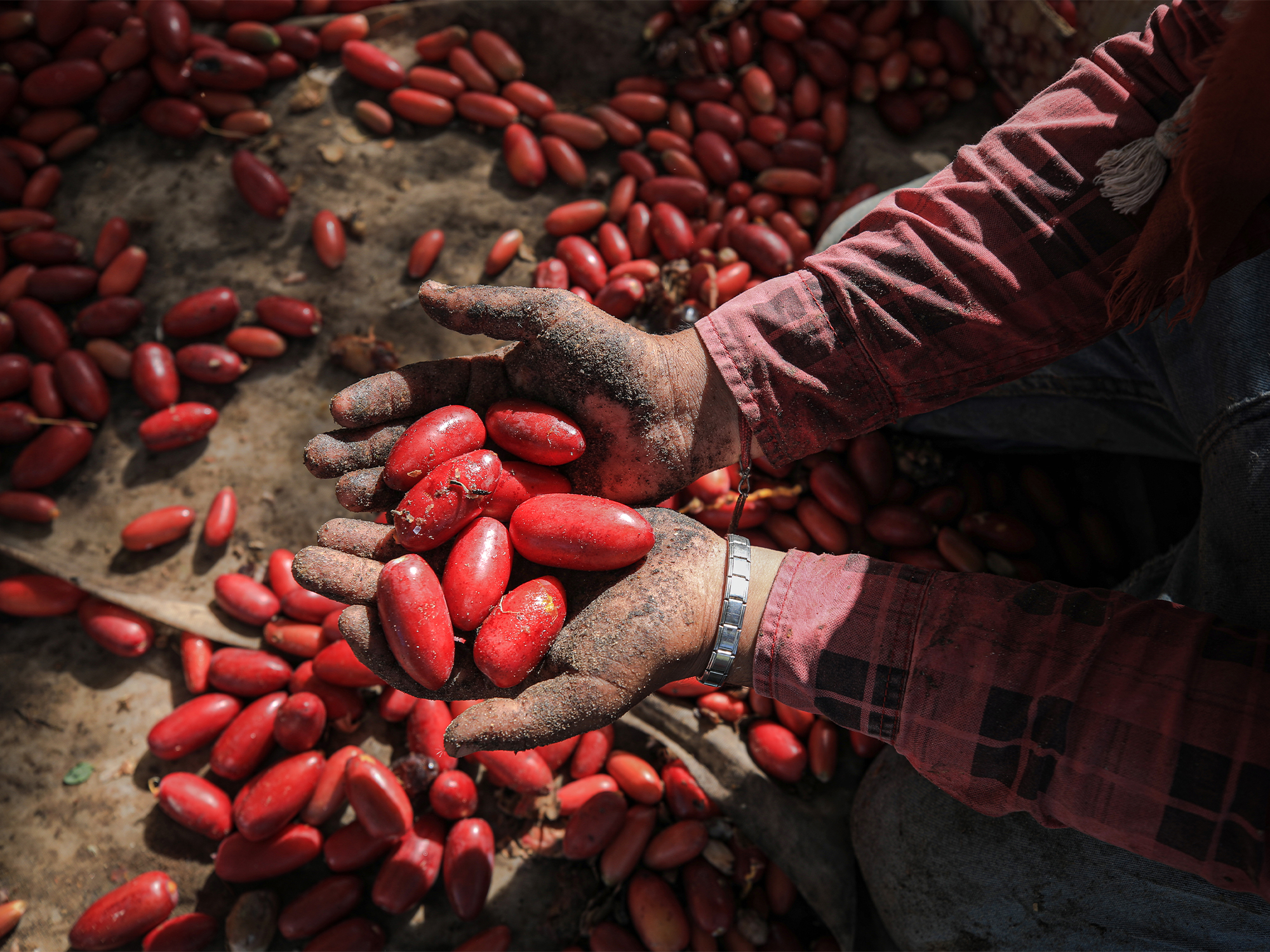
The Israeli occupation and genocide in Palestine have not ended. This is the contributed article written by Mohammed H Salem, a photographer from Gaza and D4P field reporting partner.
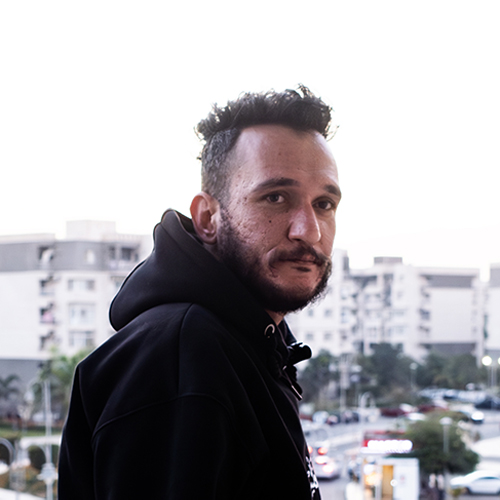
Mohammed H Salem
A photographer from Gaza. He collaborates with various photo agencies, and he is a co-founder of the platform “Untold Palestine”. His work has been featured in a wide range of international and local magazines and media. He also works with Al Jazeera English as a freelance photographer.
Contents 目次
The Communal Act of Sharing the Harvest
When you look at photos from the palm groves of the Gaza Strip, you might mistake them for oil paintings by an artist obsessed with the colors red and gold. Yet, behind this stunning visual tapestry lies a unique story of rare human resilience, where dates transform from a mere “fruit” to a symbol of identity, resistance, and an undying memory.
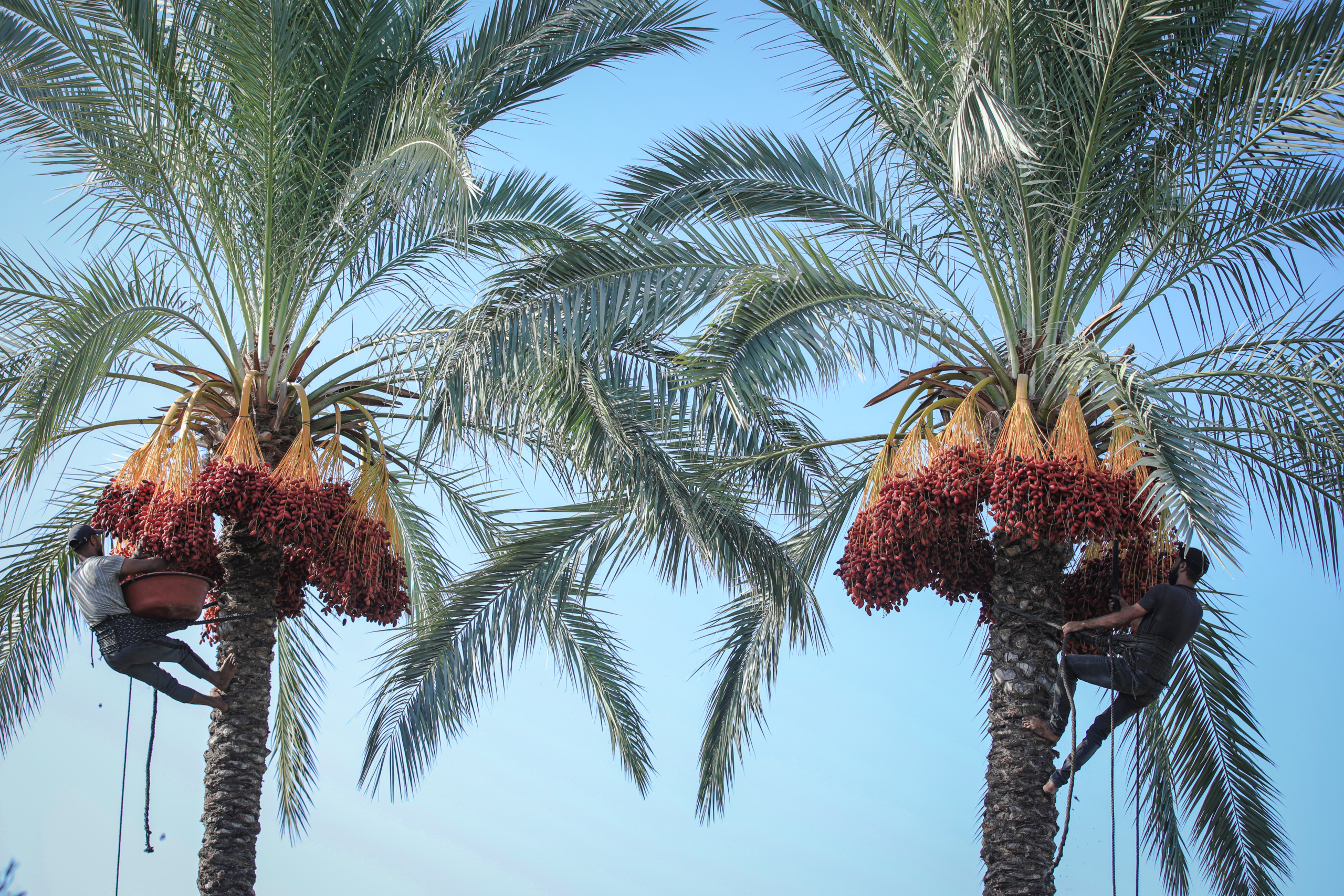
The date harvest season in Gaza, locally known as “Al-Jidad,” begins in early autumn. For Gazan farmers, the season involves more than just agricultural labor; it is the “Wedding of the Land.” Imagine the scene: farmers climb the towering palm tree trunks with intuitive skill using traditional fiber ropes called “Al-Matla’,” while women and children remain on the ground waiting to receive clusters of dates dangling above their heads like chandeliers.
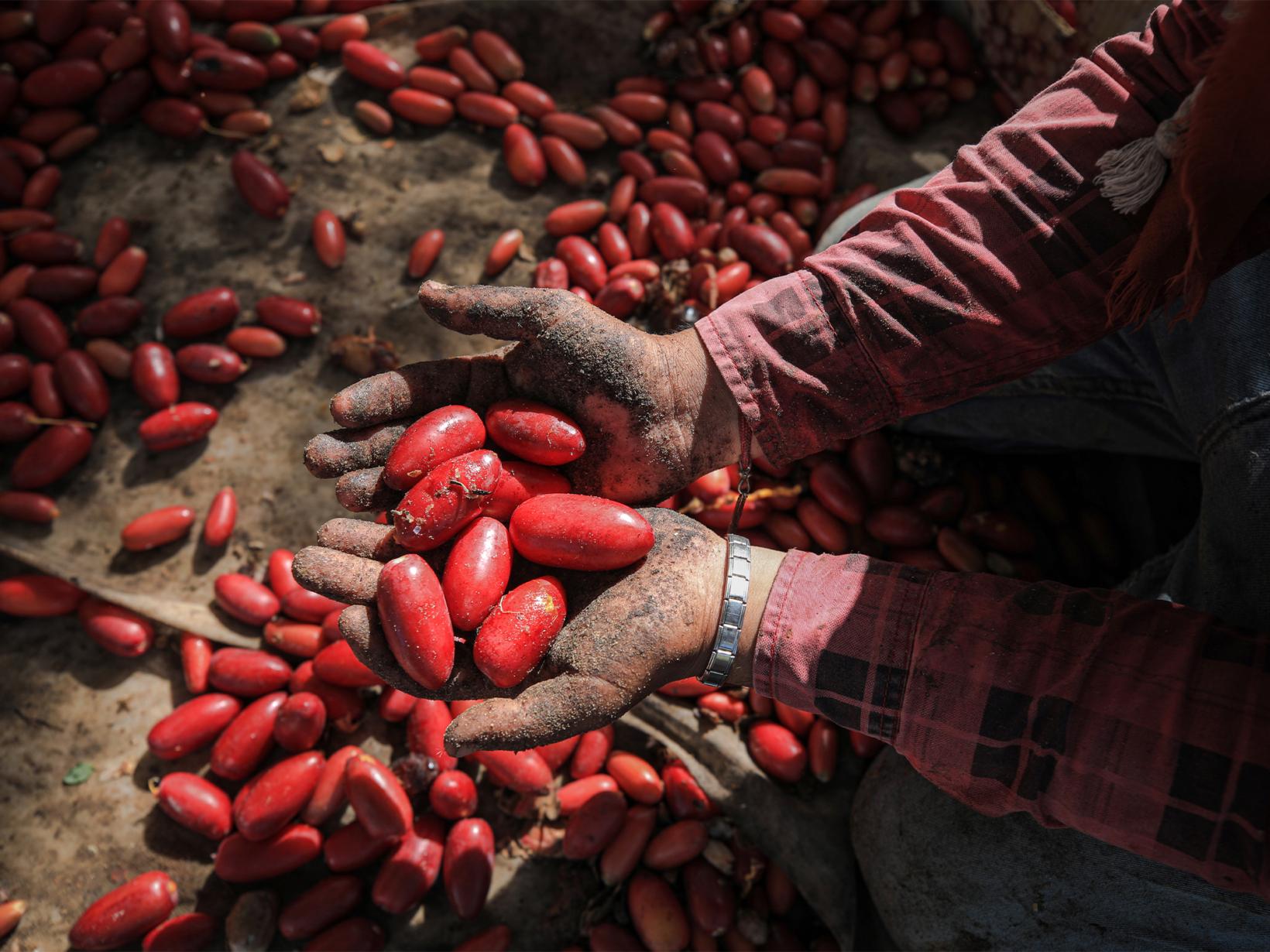
Among the date varieties in Gaza, the “Hayani” dominates with its striking, deep red appearance. This color is more than the date’s natural pigment; it is a reflection of Gaza’s warm sun and its resilient soil.
(Photo by Mohammed H. Salem / September 24,2023)
The picking process is not easy. It is a delicate craft passed from one generation to the next. Many children learn how to climb palm trees in their youth, as if the relationship with the tree begins in childhood.
Climbing carries risk, but it also carries an ancient trust between the people and the trees. One hand grips the trunk while the other cuts the cluster, letting the fruit fall gently to the ground to begin a new stage.
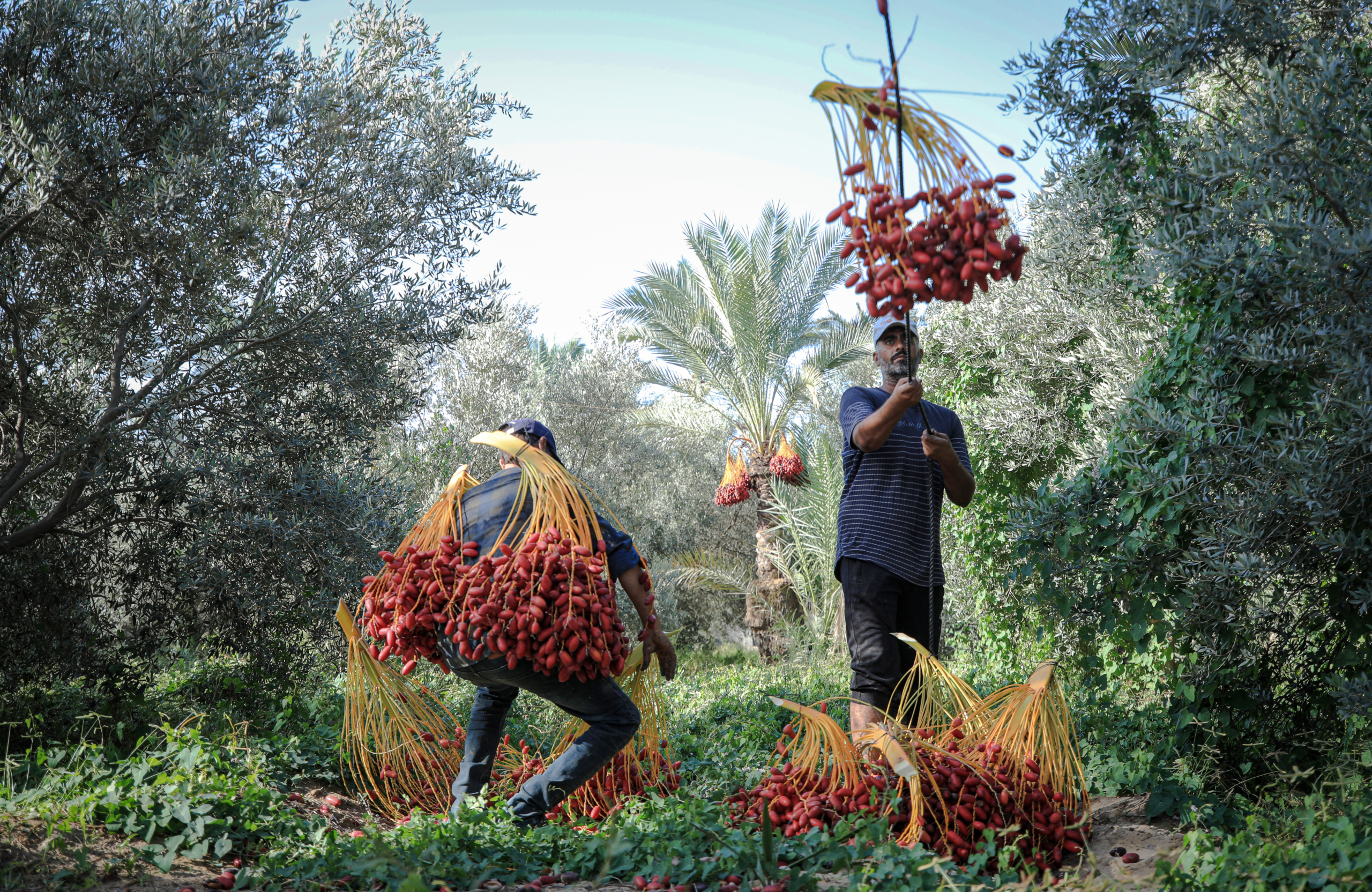
(Photo by Mohammed H. Salem / September 24,2023)
A Testament to Enduring Life
After the harvest, some of the dates are spread under the sun to dry, while another portion is stored for daily consumption, and yet another portion for the upcoming month of Ramadan(*). In this way, the harvest becomes a ritual of preparation for the future; the fruit preserves with it the summer’s heat, to reappear during a Ramadan evening months later.
(※)Ramadan
The Islamic holy month of fasting. During this period, Muslims abstain from eating and drinking from sunrise to sunset. After sunset, a celebratory meal called “Iftar” is shared. Dates, being highly nutritious, are an essential part of the tradition—often the very first thing eaten to break the fast, serving as a vital source of nourishment.
The season’s importance goes beyond economics, as it has a clear social dimension. Often, the harvest turns into a collective activity where relatives and neighbors help one another, exchanging baskets and sharing the yield. Children pick up the fallen fruit from the ground while laughing and tasting the first yields with curiosity and joy.
The palm tree itself holds deep symbolism in the local culture. It is a tree that endures the salinity of the nearby sea, the heat of the climate, and water scarcity, yet still offers sweet fruit. The resilience of the Gazan people is often compared to that of the palm trees: with deep roots in the earth and a trunk that stands tall despite the strong winds. Therefore, the harvest season is seen as a sign of continuity—proof that the land still gives, and that life, despite everything, has not stopped.
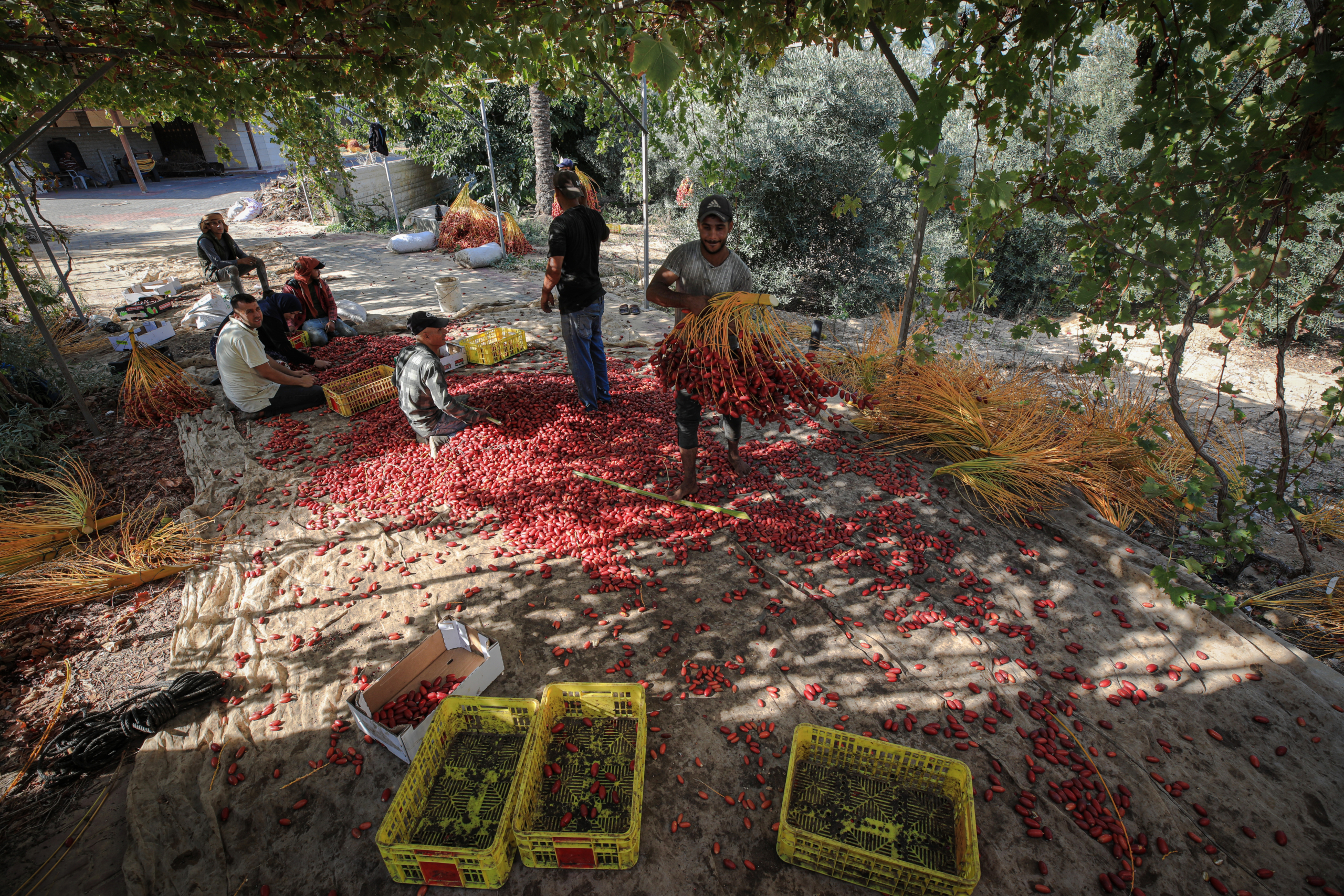
(Photo by Mohammed H. Salem / September 24,2023)
Dates and Ramadan
You cannot separate the story of dates from the memory of Ramadan in Gaza. During this month, the date transforms from being a seasonal fruit to becoming the most essential item on the table. For Gazans, dates are the very first thing that touches their lips after long hours of fasting. The fruit connects them spiritually to an ancient tradition of the Prophet Mohammed (Peace Be Upon Him) and to the land that provides this sustenance.
Mothers in Gaza recall beautiful Ramadan days with a bittersweet nostalgia. They did not require much on their table to consider it rich; dates, Arabic coffee, and some “Dukka” (ground wheat and thyme) were enough to bring a smile.
In those evenings, dates were distributed to passersby in the streets just before the call to prayer, embodying the “innate generosity” of a people who share what little they may have to create a wealth of love.
A Defiant Aroma Against the Sounds of Bombardment
As Ramadan nears its end, the baking festivities begin. In every Gazan home, large amounts of dates are ground into smooth “Ajwa” (date paste), after which they are kneaded with virgin olive oil and anise. The women then gather around wooden tables to make “Ma’amoul” (date-filled cookies) in a social ritual celebrating Eid that defies the sounds of warplanes, drones, and bombing.
The smell of Ma’amoul wafting from traditional ovens in narrow alleys is the aroma of life. It is the way the people of Gaza tell the world:
“We are here, we bake, we eat, and we celebrate.”
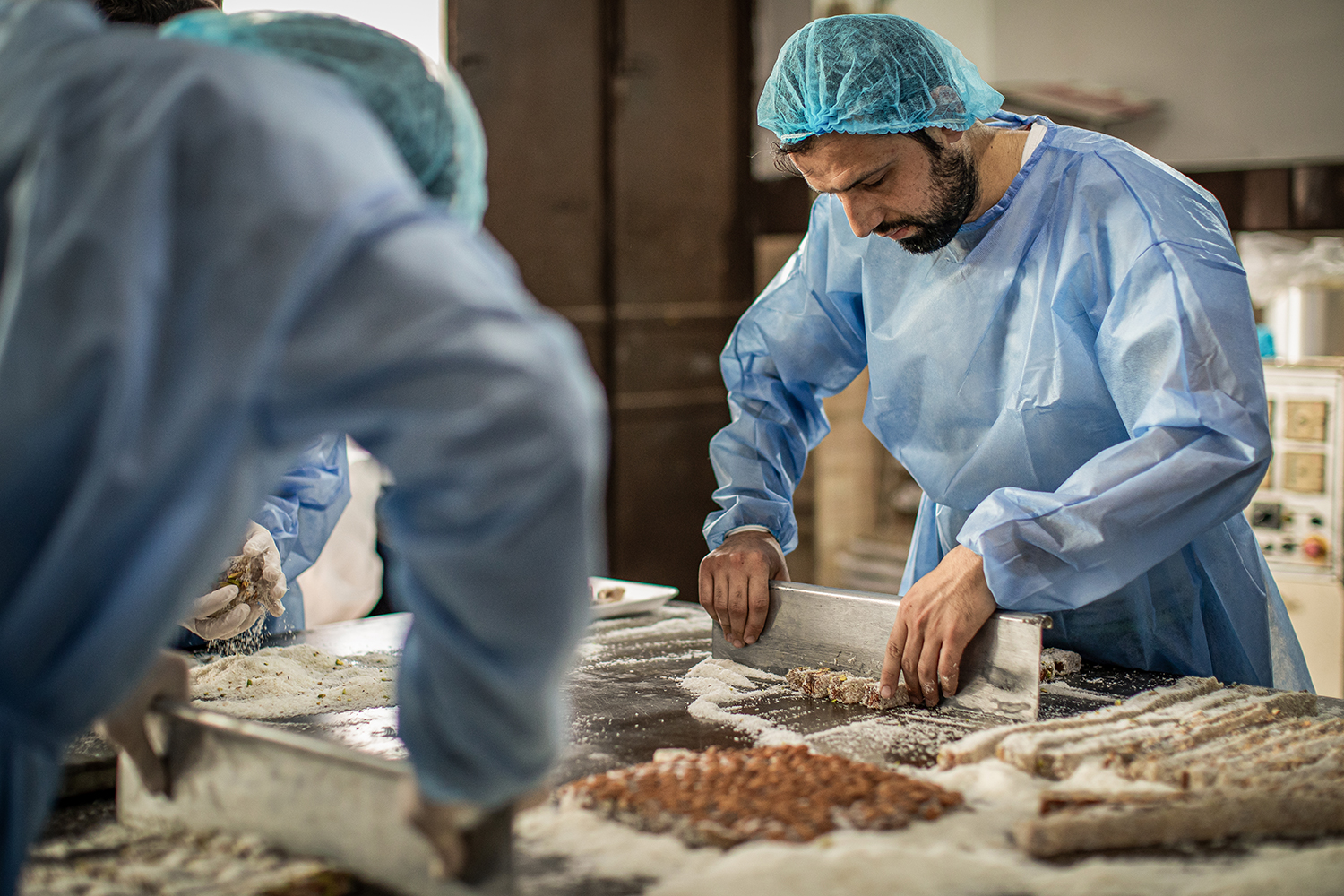
Palestinian workers produce Turkish delight inside a local factory ahead of Eid al-Fitr in Jabalia refugee camp, northern Gaza Strip.(Photo by Mohammed H. Salem / 2023)
The Story Encased in a Single Date
Some things in Gaza may seem simple, but their simplicity is the source of their strength. The date is not just an agricultural product; it is a thread connecting the summer to Ramadan, the land to the table, and the past to the present. From the heat of the harvest season to the chill of Iftar evenings, a whole journey is encapsulated in a small fruit.
Photos, too, are not only documentation of a fruit, but of a daily life that insists on continuing. In a place that knows challenges too well, rituals become forms of steadfastness.
When a family gathers around a simple plate of dates, they are sharing more than food; they are sharing memory, belonging, and a silent hope that the next season will still come.
A single date may seem small in a human hand. But, in Gaza, its meaning encapsulates a season, a home, and the story of an entire city.
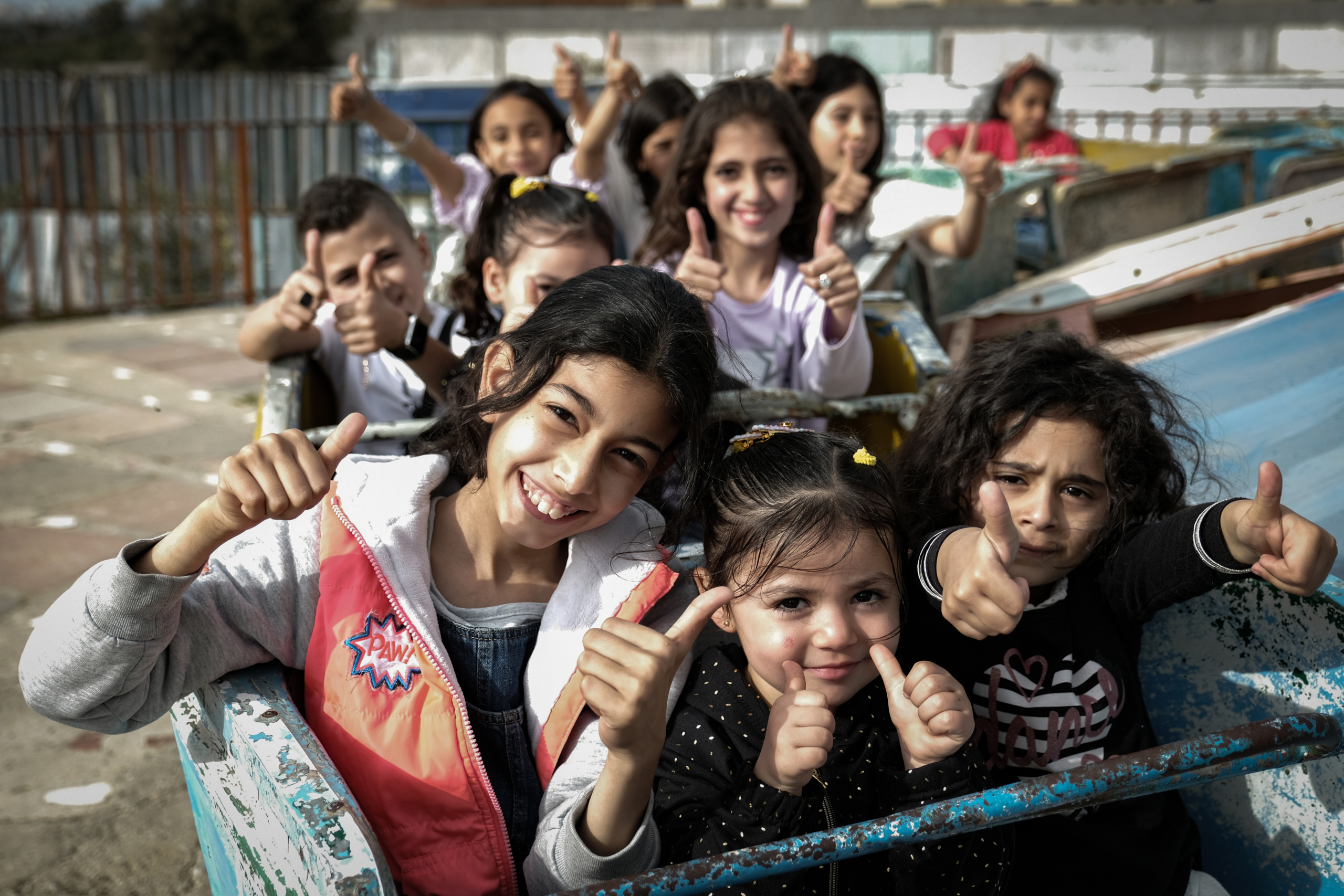
Palestinian children play joyfully at an amusement park during Eid al-Fitr in central Gaza City.(Photo by Mohammed H. Salem / May 4,2022)
(Text: Mohammed H. Salem/ Edit: Kei Sato)
あわせて読みたい・聴きたい
本記事の取材・執筆や、本サイトに掲載している国内外の取材、記事や動画の発信などの活動は、みなさまからのご寄付に支えられています。
これからも、世界の「無関心」を「関心」に変えるために、Dialogue for Peopleの活動をご支援ください。
寄付で支えるメールマガジンに登録しませんか?
新着コンテンツやイベント情報、メルマガ限定の取材ルポなどをお届けしています。
 安田菜津紀
安田菜津紀 D4P取材班