

From the Olive Tree to the Table―A Season of Life, Memory and Work in Gaza(Part 2)
Israel’s occupation in violation of international law and the massacres continue. Even before the establishment of the State of Israel on May 14, 1948, many Palestinians were displaced from their homeland. This is a contributed article written by Mohammed H Salem, a photographer from Gaza and D4P field reporting partner. Click here for Part 1.
Mohammed H Salem
A photographer from Gaza. He collaborates with various photo agencies, and he is a co-founder of the platform “Untold Palestine”. His work has been featured in a wide range of international and local magazines and media. He also works with Al Jazeera English as a freelance photographer.
Contents 目次
From Hand to Press
Once the harvest is over, the trajectory of the journey changes. The fruit leaves the field and enters a new stage: pressing.
But before modern machinery, there was a long history of presses that relied on stone and human strength.
In traditional presses, the fruit was crushed and ground, then pressed through simple mechanical means in a process that required considerable time and effort. The press was part of the agricultural and social fabric of the village and the city, where farmers arrived with their harvests and returned with their oil.
Olive cultivation and oil production are not new in Palestine. A recent historical study traces olive cultivation and oil production in Palestine across roughly 550 years, noting that Ottoman records from the sixteenth century documented the number of olive trees, presses, and villages producing oil.
This long history adds another layer to the story of the fruit. What happens in the press today is not the beginning of the story, just as the tree itself is not the beginning of the relationship between people and olives. Many generations have travelled this path in different ways.
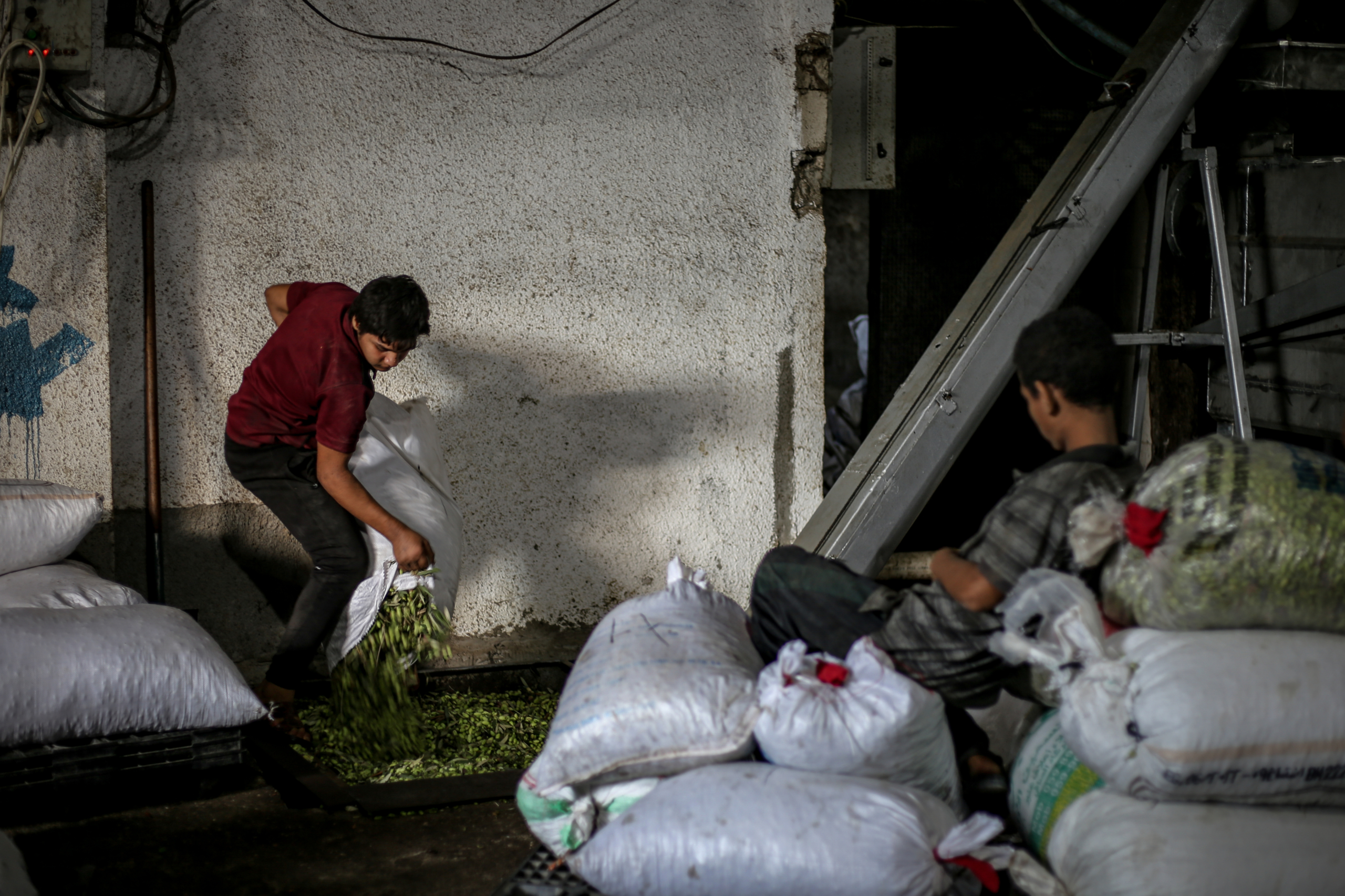
Workers handle sacks of freshly harvested olives at an olive press in Gaza. (Photo by Mohammed H. Salem / 2022)
Where two eras intersect
With the old press, time seems to move more slowly. There are no long conveyor belts moving thousands of kilograms of olives in minutes, and the process is not divided among dozens of machines. There is stone. Fruit. Human strength. And the sound of work. But behind that slowness lies knowledge accumulated across generations: how to crush the fruit, how to press it, and how to separate the oil from the other parts of the olive.
That is why the presence of an old press beside a modern one represents more than a difference in equipment. It represents a passage between two eras. One in which people were intimately close to every stage of extracting the oil, and another in which machines carry most of the work.
And the remarkable thing is that the fruit has not changed. The olive that once entered the stone mill decades or generations ago is the same olive that enters the machinery today. What has changed is the speed, the volume, and the way the process is controlled. But the knowledge behind the process has not disappeared. It has moved from person to person, from press to press, and from generation to generation.
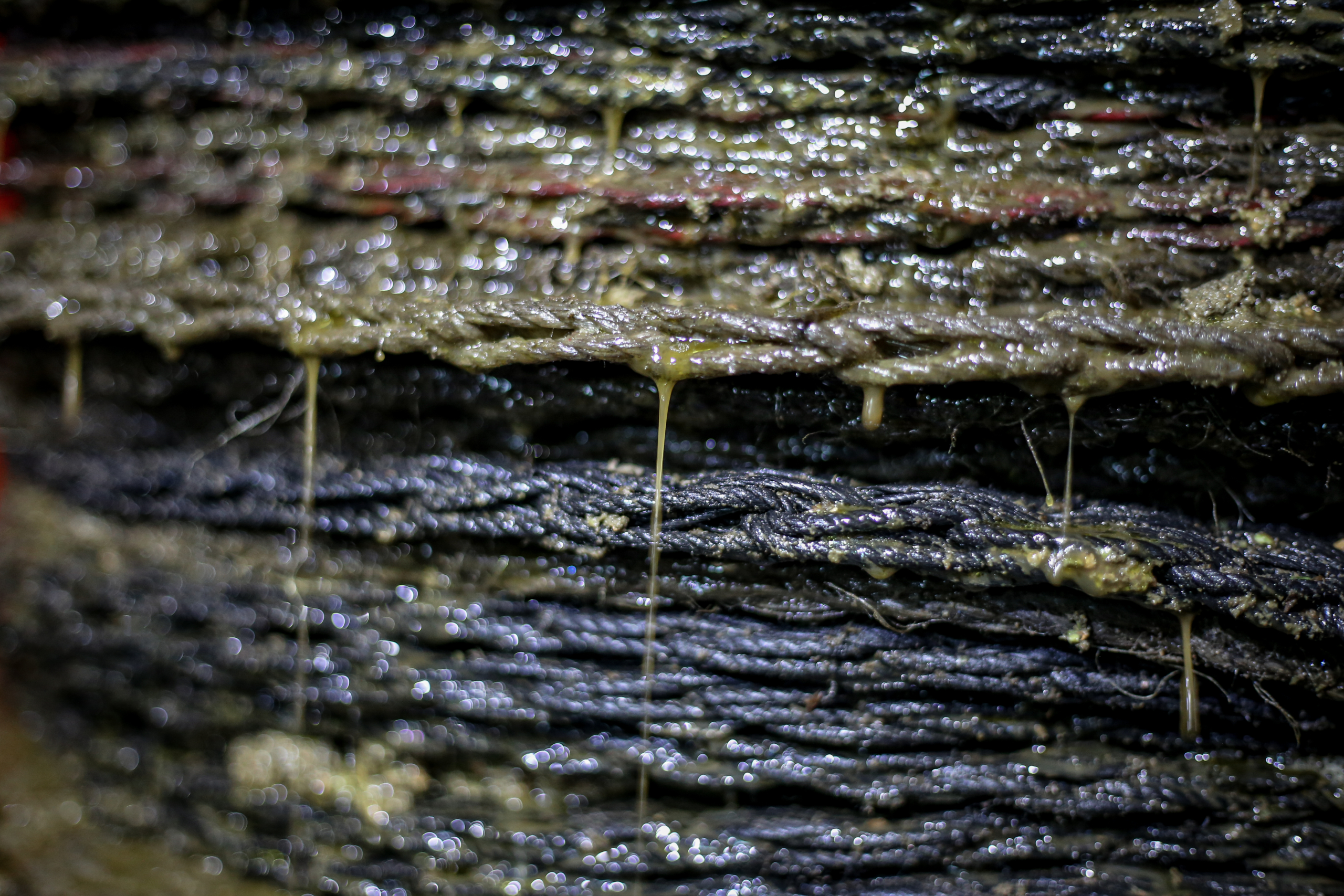
Olive oil being pressed at a traditional olive mill. (Photo by Mohammed H. Salem / 2022)
Then Came the Machine
Inside the production line, the image we saw in the field disappears. There are no longer branches or leaves, or children picking fruit from the ground. The scene changes completely. Crates are emptied. The fruit moves along conveyor belts. Leaves and debris are removed. The olives are washed and then move on to grinding. What was once a chain of manual operations in the old press has become an integrated production line.
The process begins with cleaning the olives, then washing and grinding them, turning them into a paste, pressing them, separating the oil, and refining it before bottling. This development is not simply a matter of technological convenience. Improving processing efficiency and oil quality is part of the challenges that the Palestinian olive sector negotiates.
But technology has not erased human beings. Hands still lift the crates. Eyes still watch the machines. Workers still follow the crop as it moves from one stage to the next. The machine has made the process faster, but it has not separated the olive from the people who grow it, carry it, press it, and sell it.
Here, the old press meets the modern one. In one, people used stone to multiply their strength. In the other, they use machines to multiply their production. But in both, the process begins with the same fruit.
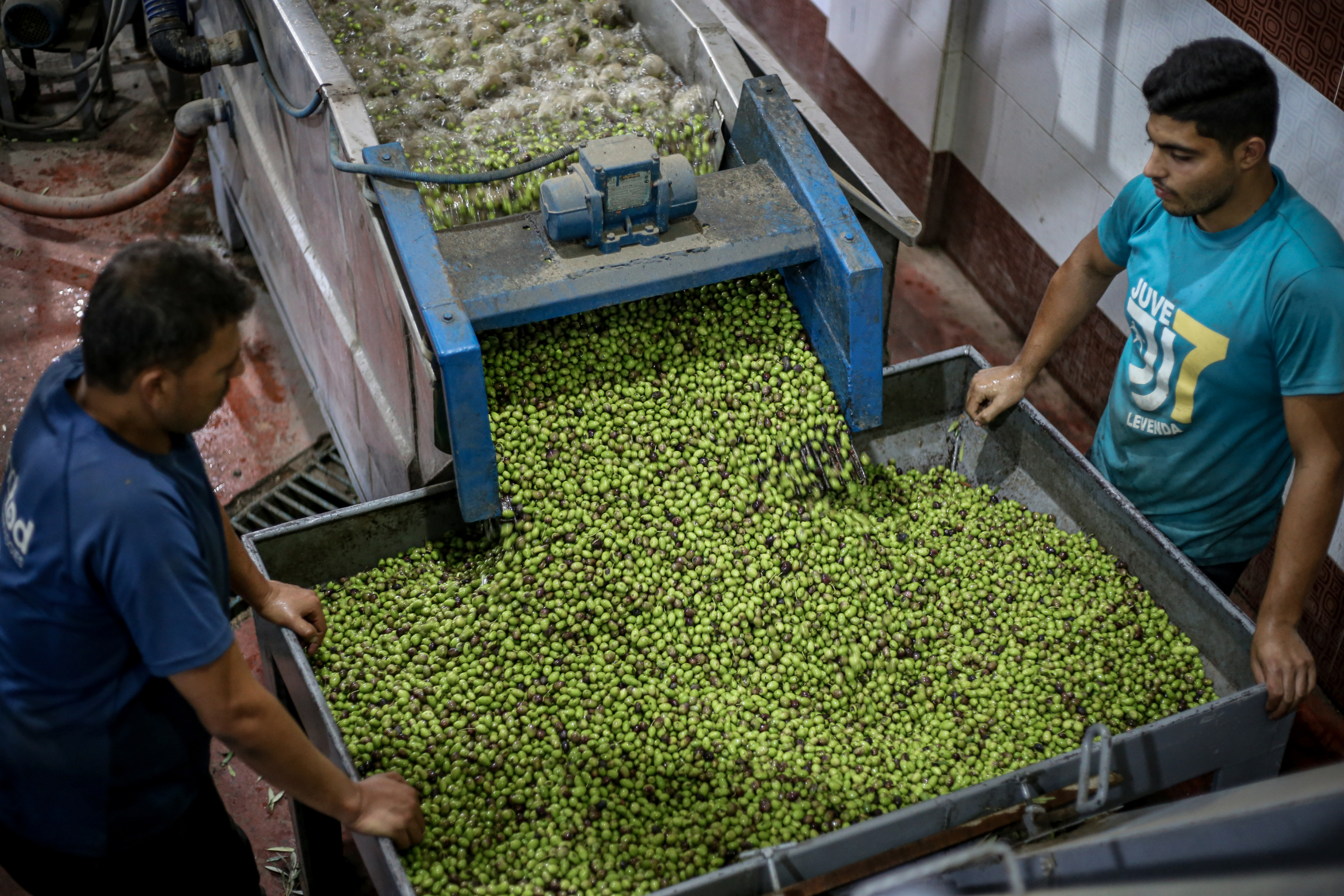
Workers guide freshly harvested olives through the processing line at an olive press in Gaza. (Photo by Mohammed H. Salem / 2022)
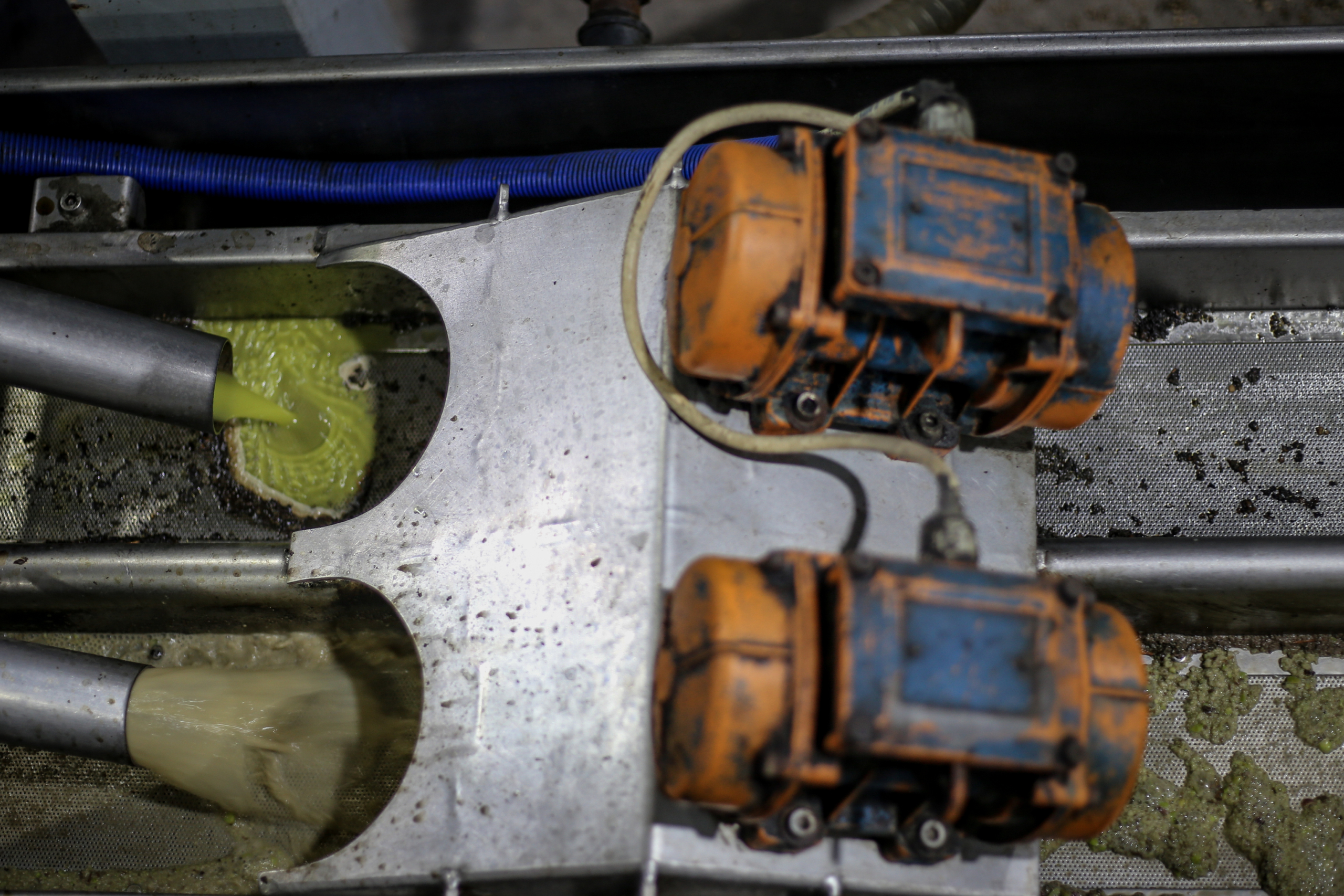
Olive paste moves through the machinery as the fruit is transformed into oil. (Photo by Mohammed H. Salem / 2022)
The Moment When Everything Changes
The season reaches its decisive moment. After seeing the fruit hanging from the tree, then in a child’s hand, then inside a crate, then in the old press, and finally moving along belts and machines, the result toward which every stage has been moving finally appears.
Oil.
The image of oil emerging from the press is not simply an image of a product. It is an image of an entire journey. A journey that began with the land, but did not end there. It began with a tree, then became a relationship, then became memory, and finally became food.
Across the history of Palestinian olive cultivation, knowledge has accumulated over centuries. What people do today is not entirely separate from what those before them did; the tools have changed, but the relationship between people and the tree has endured.
Perhaps that is why a small drop of oil can feel more significant than its weight. Because it holds an entire season, while also carrying the traces of seasons that came before it.
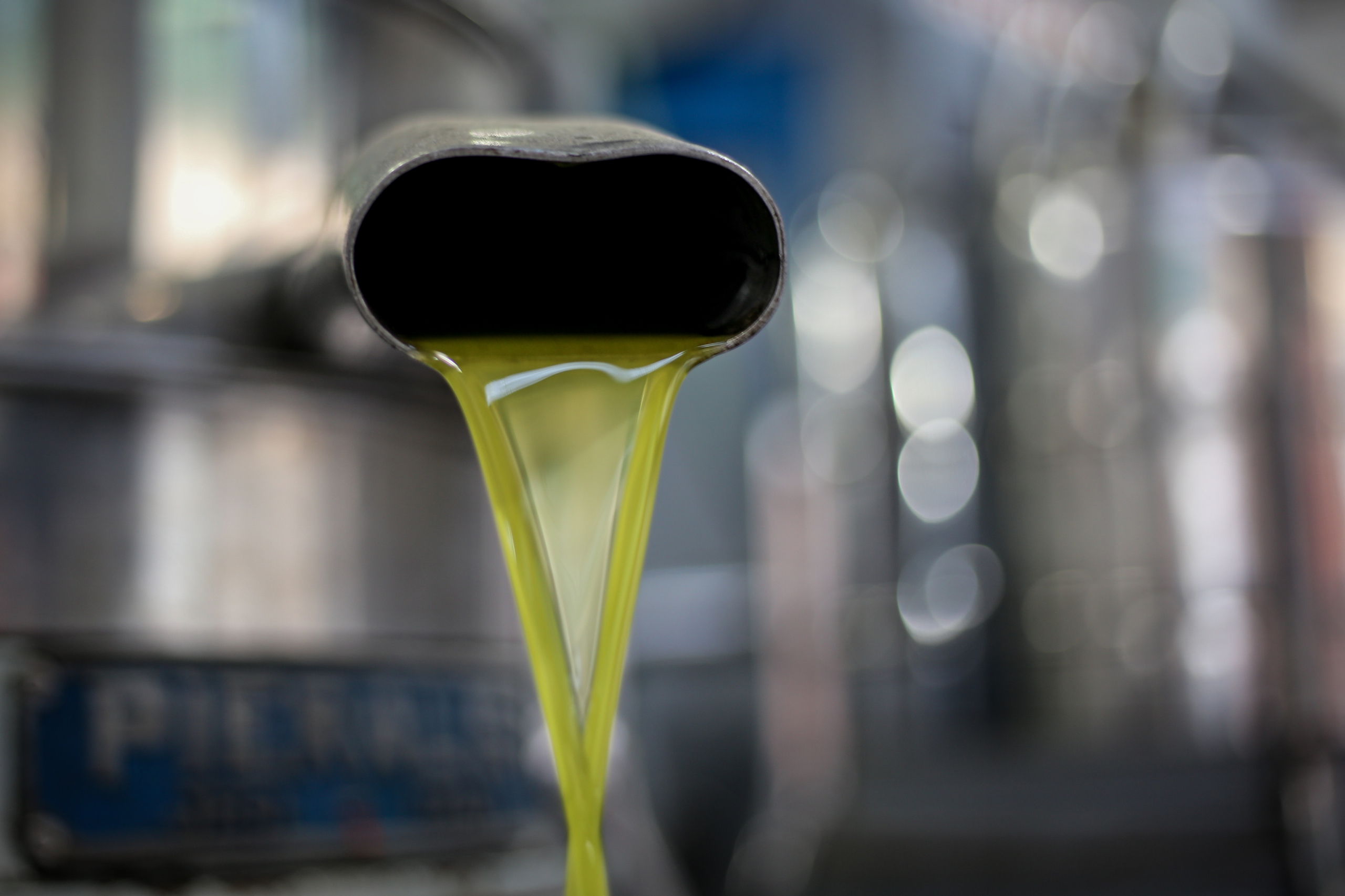
Fresh olive oil flows from the pressing process at an olive mill in Gaza. (Photo by Mohammed H. Salem / 2022)
What a single bottle holds
Once the oil is bottled, it can move into another stage: the market. Here, the economic value of the season becomes visible. Farmers do not grow olives for symbolism alone. Land must be cared for, workers must be paid, equipment maintained, water supplied, presses operated, and the harvest transported and sold.
The FAO notes that the olive sector contributed around 15 percent of agricultural GDP in the West Bank and Gaza Strip in 2020, while also supporting thousands of households and seasonal jobs.
Yet, economics is not everything. In some homes, part of the oil is kept for consumption throughout the year, while another part is sold to cover the family’s financial needs. That is why a bottle leaving the press can be, at the same time: food, income, a household reserve, and cultural memory of the harvest season.
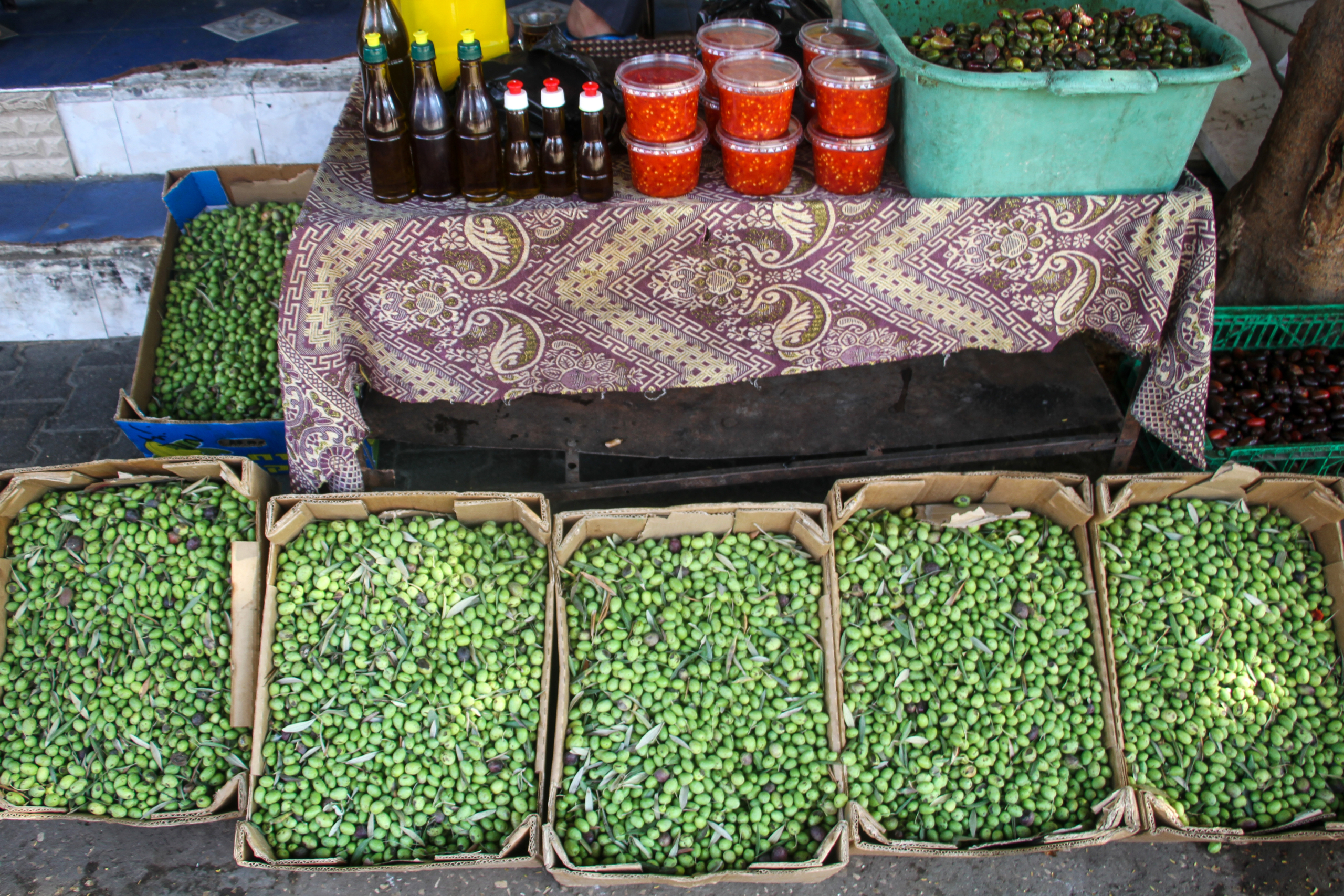
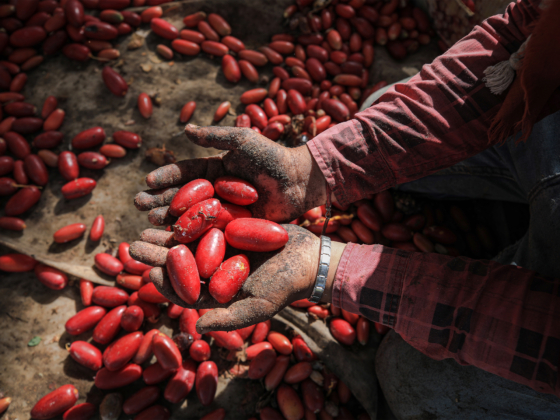
Freshly harvested olives and olive products are displayed for sale in Gaza. (Photo by Mohammed H. Salem / 2020)
To the Table
In the end, the oil reaches the place it has been waiting for from the beginning. The kitchen. The fire. The bread. And the table. There, the oil becomes food once again. It can be dipped with bread, used in preparing manakish, or added to Palestinian dishes such as musakhan, where olive oil is an essential part of the flavor and preparation.
And the circle is complete.
The fruit that began on a tree reaches a child’s hand. From the child’s hand to the crate. From the crate to the press. From the old press to the modern machine. From the machine to the bottle. From the bottle to the market. Then to the kitchen. And finally, to the table.
But what makes this journey more than a production chain is that the human being remains present at every stage. The family that began the harvest is the same family waiting for the oil at the end of the season. The child who gathered the fruit now sees the result of the work on the table. The tree that was merely part of the field at the beginning of the story has become part of a meal at the family table in the end.
But behind that meal is a longer story. Perhaps one of the grandparents ate from the oil of this land decades before this child was born. Perhaps parents learned how to care for the tree from their own elders, and passed that same knowledge on to their children. And so it is not only the fruit that is passed on. Knowledge is passed on. Memory. A relationship. And something of the lives of the ancestors who came before us.
Perhaps that is why the olive in Gaza cannot be reduced to the word “crop.” It is the economy, food, family labor, agricultural skill, and an industry changing with time. It is also a long relationship between people and land. And an even longer relationship between generations.
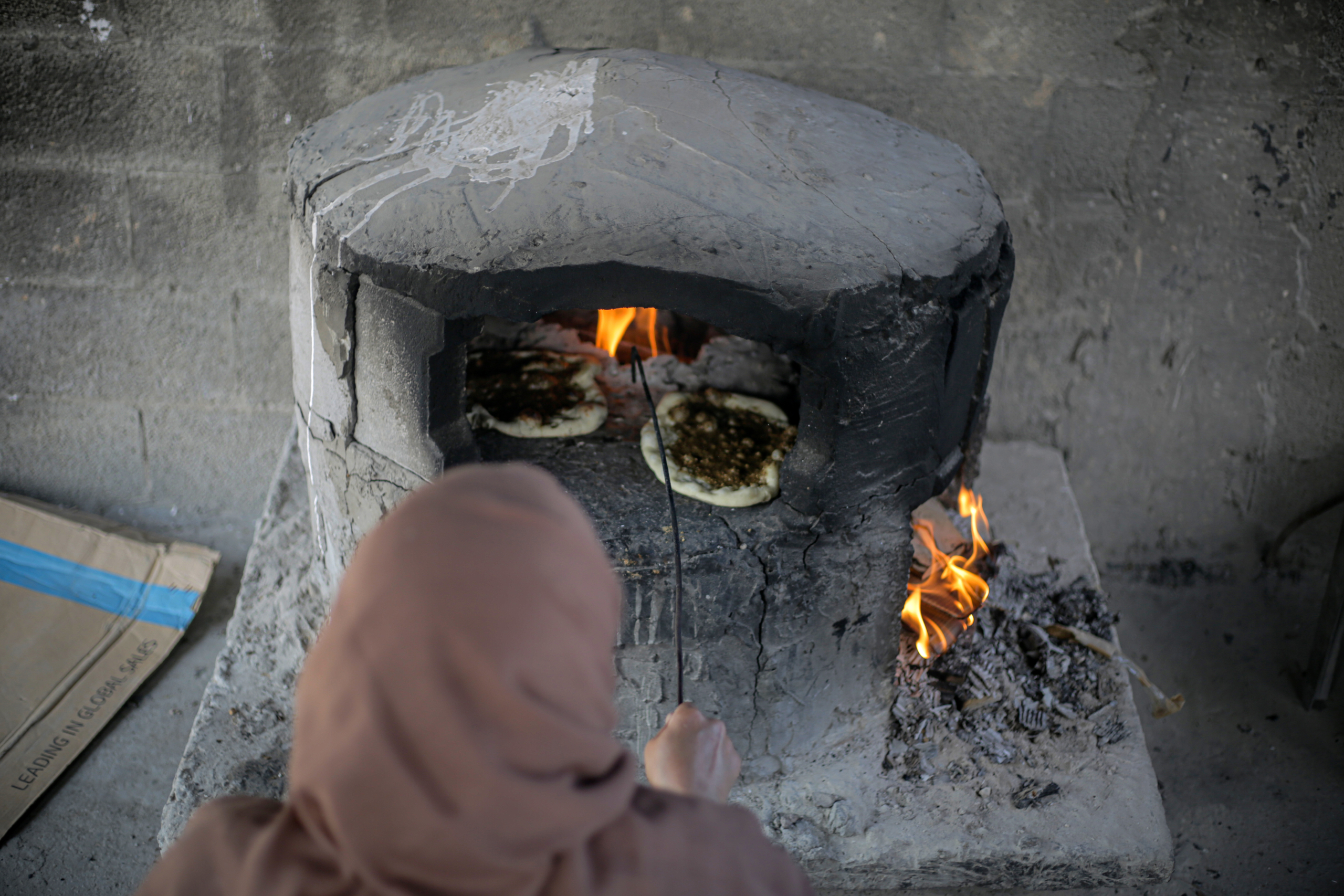
A Palestinian woman prepares manakish with olive oil and za’atar in a traditional oven at her home during the olive harvest season. (Photo by Mohammed H. Salem / 2021)
The olive trees still stand quietly
With every season, a new generation arrives to continue what the previous one began. Perhaps that is why the olive tree carries a meaning that extends beyond the life of a single season. It can watch people come and go, homes change, and entire lives transform, yet it continues to give the same fruit.
When a child reaches out today to pick an olive from the tree, they are not starting the story from the beginning. They are entering a story that began before them. And when the oil returns home, it does not return carrying only what the hands gathered that day. It returns carrying something of the land, something of the labor, and something of the family’s memory.
At the end of every season, when the oil is poured onto the table, a single drop condenses a journey that began months earlier—and years before that, when the tree was first tended.
From the olive tree to the table, it is not only the fruit that travels. An entire season of people’s lives travels with it, carrying the story of one generation to the next. And at the center of it all remains the olive tree, bearing witness to everything.
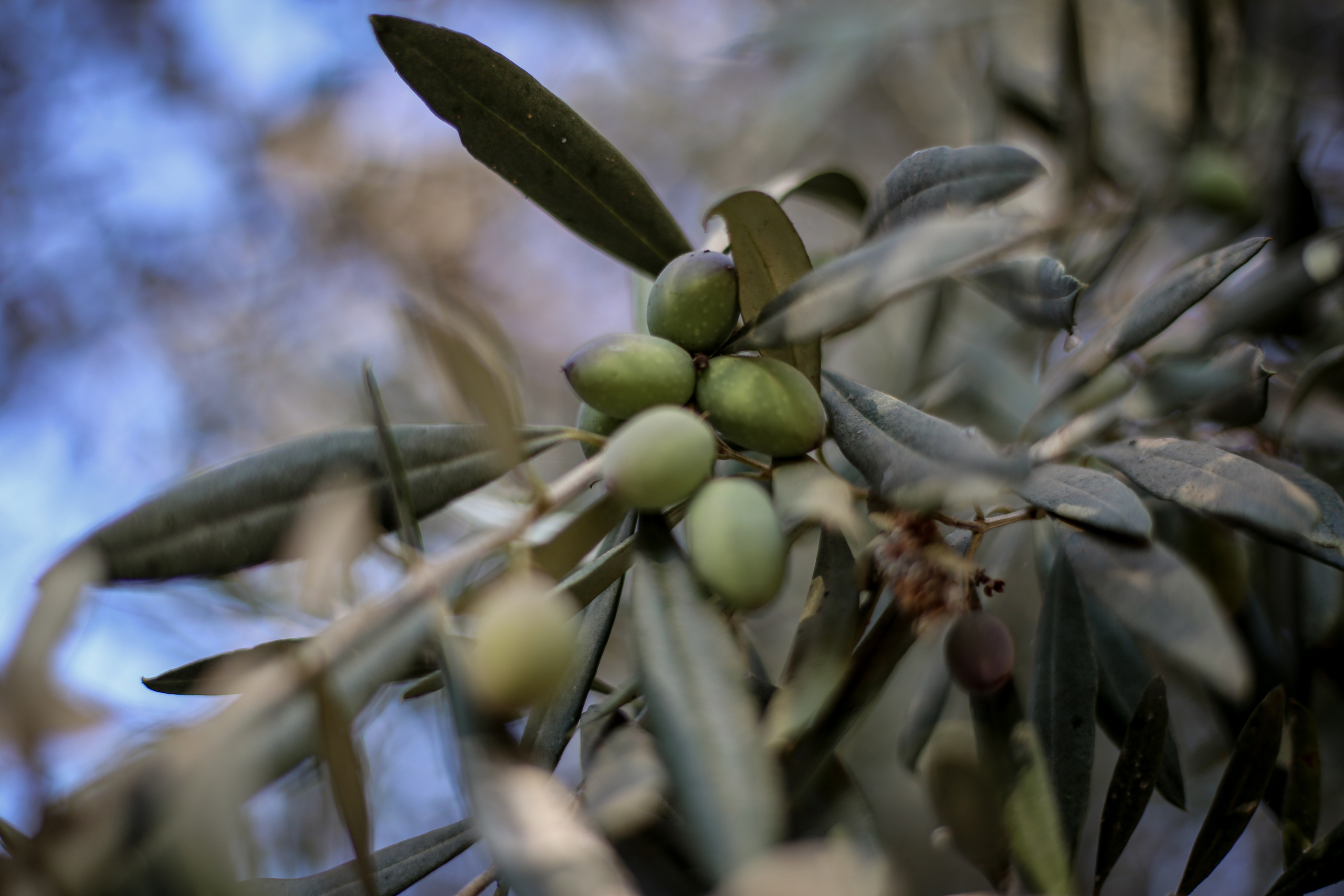
Olives hang from a tree at the beginning of their journey from the tree to the table. (Photo by Mohammed H. Salem / 2022)
[Translator’s Note: On the Damage Caused by the Military Offensive Since October 2023]
The olive cultivation and vibrant way of life in Gaza described in this piece have faced devastating destruction following the large-scale military offensive launched by Israeli forces since October 2023. According to assessments by the Food and Agriculture Organization of the United Nations (FAO), the United Nations Satellite Centre (UNOSAT), and other agencies, agricultural land across the Gaza Strip has rapidly deteriorated, with orchards, olive groves, greenhouses, and critical agricultural infrastructure suffering extensive damage. Furthermore, analyses of satellite imagery indicate that the ongoing conflict has resulted in the destruction of the vast majority of Gaza’s permanent fruit tree crops.
Writerこの記事を書いたのは
Writer

写真家モハンメド・H・サレムMohammed H Salem
パレスチナ・ガザ地区出身の写真家。様々な写真エージェンシーと協働するほか、プラットフォーム「Untold Palestine」の共同創設者の一人でもある。その作品は、国内外の多くの雑誌やメディアで発表されている。また、フリーランスとして「アルジャジーラ・イングリッシュ」とも提携している。
あわせて読みたい・聴きたい
本記事の取材・執筆や、本サイトに掲載している国内外の取材、記事や動画の発信などの活動は、みなさまからのご寄付に支えられています。
これからも、世界の「無関心」を「関心」に変えるために、Dialogue for Peopleの活動をご支援ください。
寄付で支えるメールマガジンに登録しませんか?
新着コンテンツやイベント情報、メルマガ限定の取材ルポなどをお届けしています。

 佐藤慧
佐藤慧 安田菜津紀
安田菜津紀 D4P取材班