

Gaza Under Attack and Invasion Two Women, Two Journeys―Creativity, Care and Life After the War Changed Everything
Israel’s occupation in violation of international law and the massacres continue. Even before the establishment of the State of Israel on May 14, 1948, many Palestinians were displaced from their homeland. This is a contributed article written by Mohammed H Salem, a photographer from Gaza and D4P field reporting partner.
Mohammed H Salem
A photographer from Gaza. He collaborates with various photo agencies, and he is a co-founder of the platform “Untold Palestine”. His work has been featured in a wide range of international and local magazines and media. He also works with Al Jazeera English as a freelance photographer.
Throughout Palestinian history, women have played an essential role in both the national struggle and the building of society. Their contributions have taken many forms: from education, agriculture and community care to political organising and resistance. In 1929, more than 200 Palestinian women gathered in Jerusalem for the Palestine Arab Women’s Congress, helping establish an organised women’s movement at a time of growing political upheaval. During the Great Revolt of 1936–1939, women participated in demonstrations, supported the injured and detained, carried supplies and helped sustain communities under British rule. Others worked as teachers, nurses, organisers and caregivers, preserving knowledge, family life and social ties through periods of upheaval and displacement.
This history is not only a record of public action. It is also a history of the work women have done to sustain everyday life, create opportunities and care for others, often under difficult circumstances. Palestinian women’s experiences cannot be reduced to a single role or a single story. They are shaped by different ambitions, responsibilities and choices, as well as by the political realities surrounding them.
The stories of Farah Al-Ajla and Islam Majd Al-Ayadi belong to this broader history, but each follows a different path.
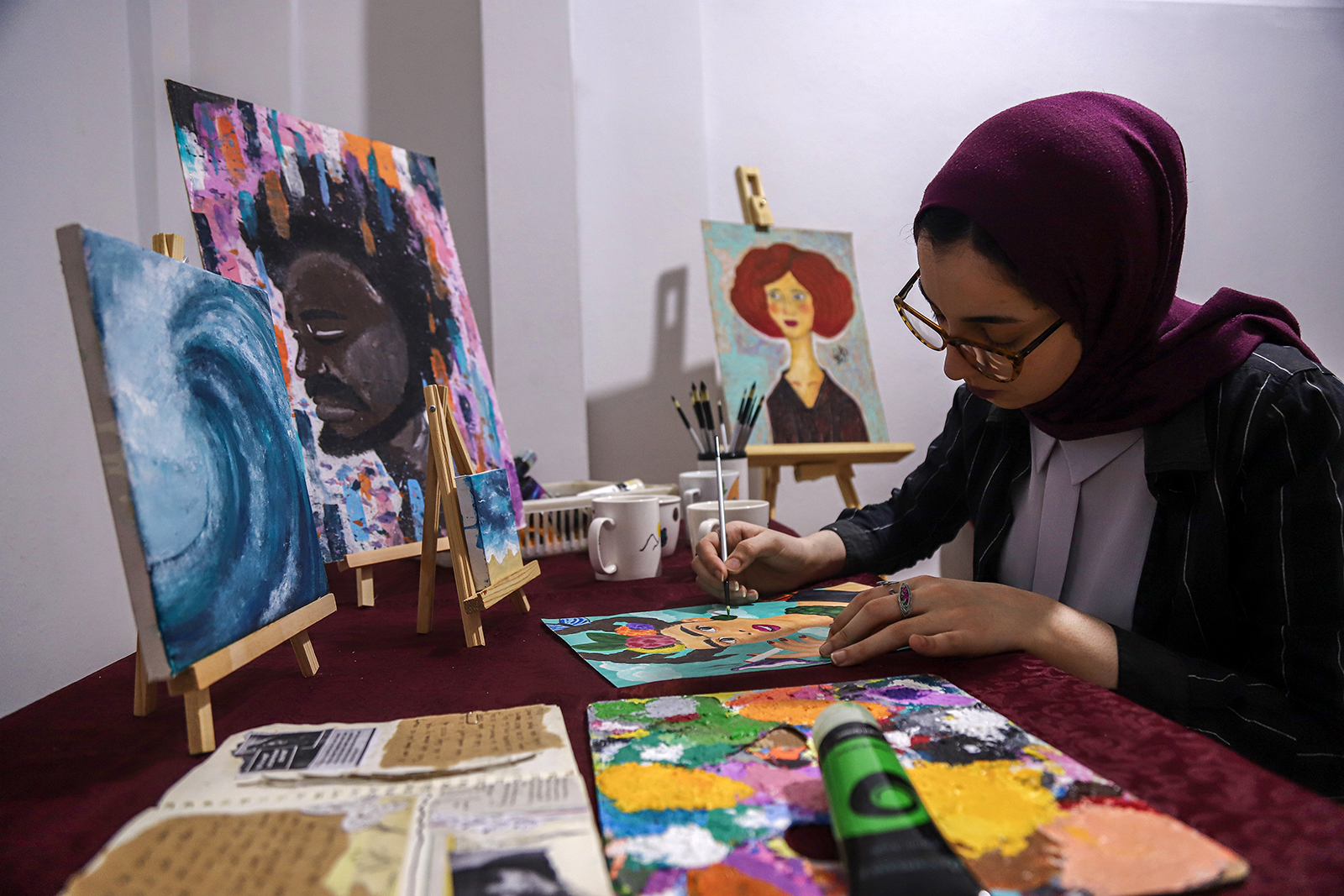
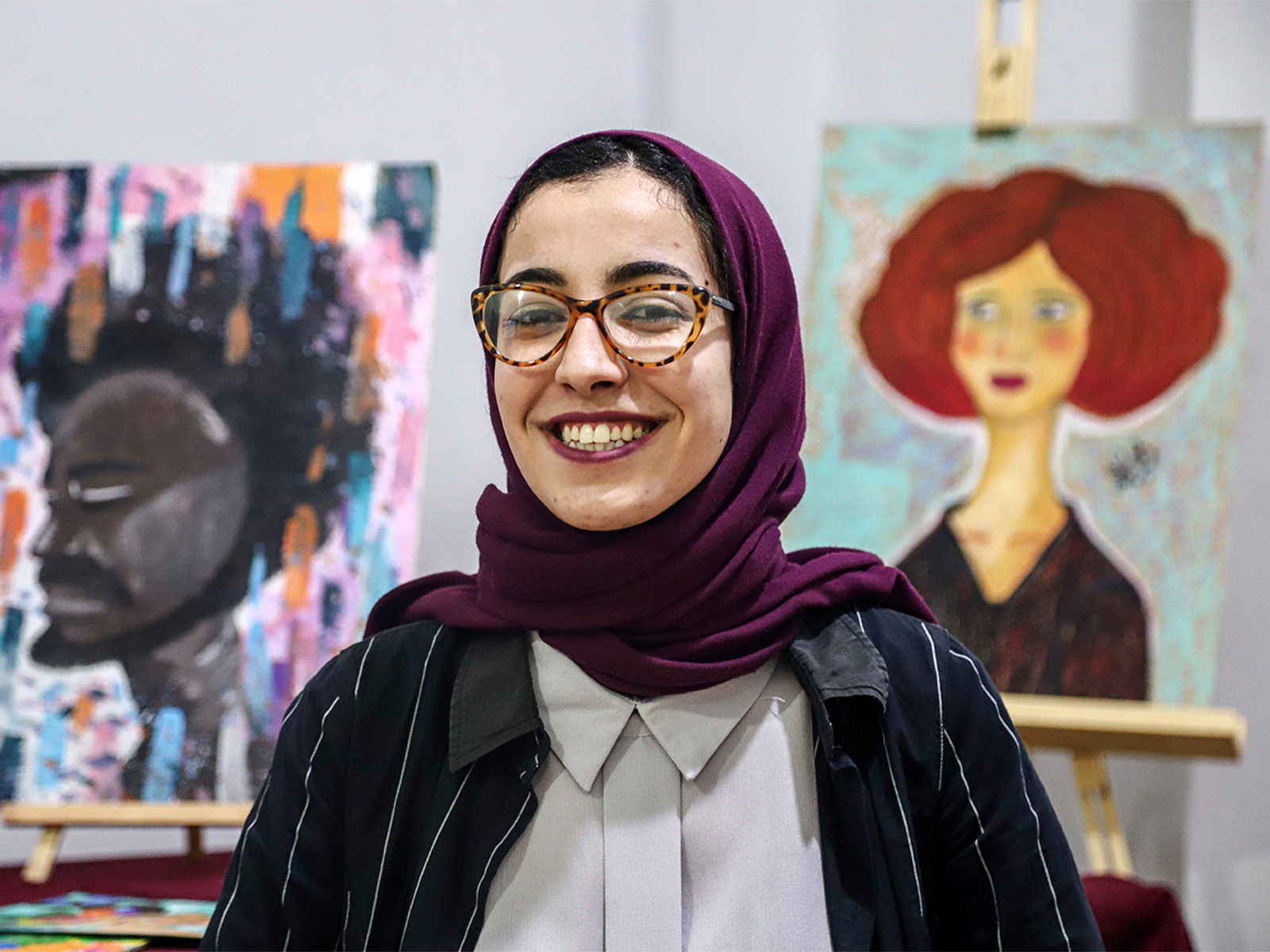
Farah working on her handmade art business from her home in Gaza, before the war.(Photo by Mohammed H. Salem / 2021)
Before the war, Farah was developing a handmade accessories business in Gaza, turning her creative experiments into a project of her own. Islam, a graduate in psychological counselling, was preparing for a career supporting others. The war disrupted both lives in different ways. Farah’s work was affected by the collapse of the conditions that had allowed her business to grow. Islam sustained serious injuries and later found herself providing psychological support to Palestinian children and women.
Their experiences are not identical, and neither story can stand for every Palestinian woman. But together, they offer a closer look at two lives that existed beyond the images of war—and at how each woman’s work, ambitions and understanding of herself have been shaped by what followed.
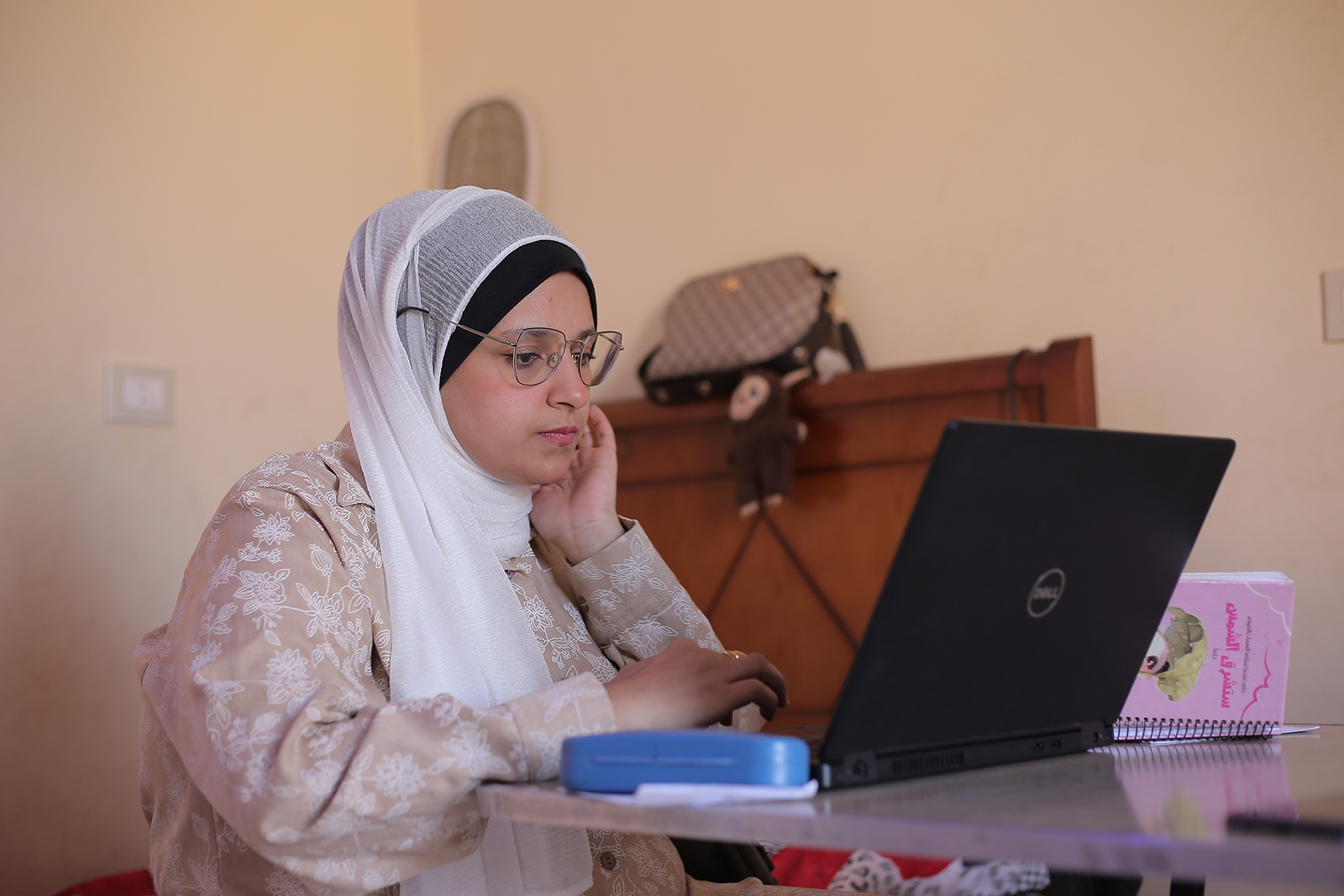
Islam preparing documents in Cairo as she gets ready to resume her work supporting children and women.(Photo by Mohammed H. Salem / 2026)
Farah Al-Ajla: Building Something of Her Own
Farah Al-Ajla’s story began with a simple interest: finding ways to give ordinary things a new life.
At home in Gaza, she experimented with painting old objects and exploring how colour could change their appearance. Later, she took some of her mother’s old accessories and tried to redesign them using LED wires. The experiment led her towards a new idea: creating accessories from wire itself.
She began with a few pieces, uncertain how people would respond. Encouragement from family and friends, along with reactions to her work on Instagram, gave her the confidence to continue. She developed her first collection of wire accessories and gradually began to imagine that something she enjoyed making could also become a business.
The decision involved practical questions. Farah wanted to complete her university education, and she understood that establishing a business would require time, effort and patience. Still, she decided to give the idea a chance. She hoped the project could provide an income and help her become more independent.
That was how Joy Pieces began.
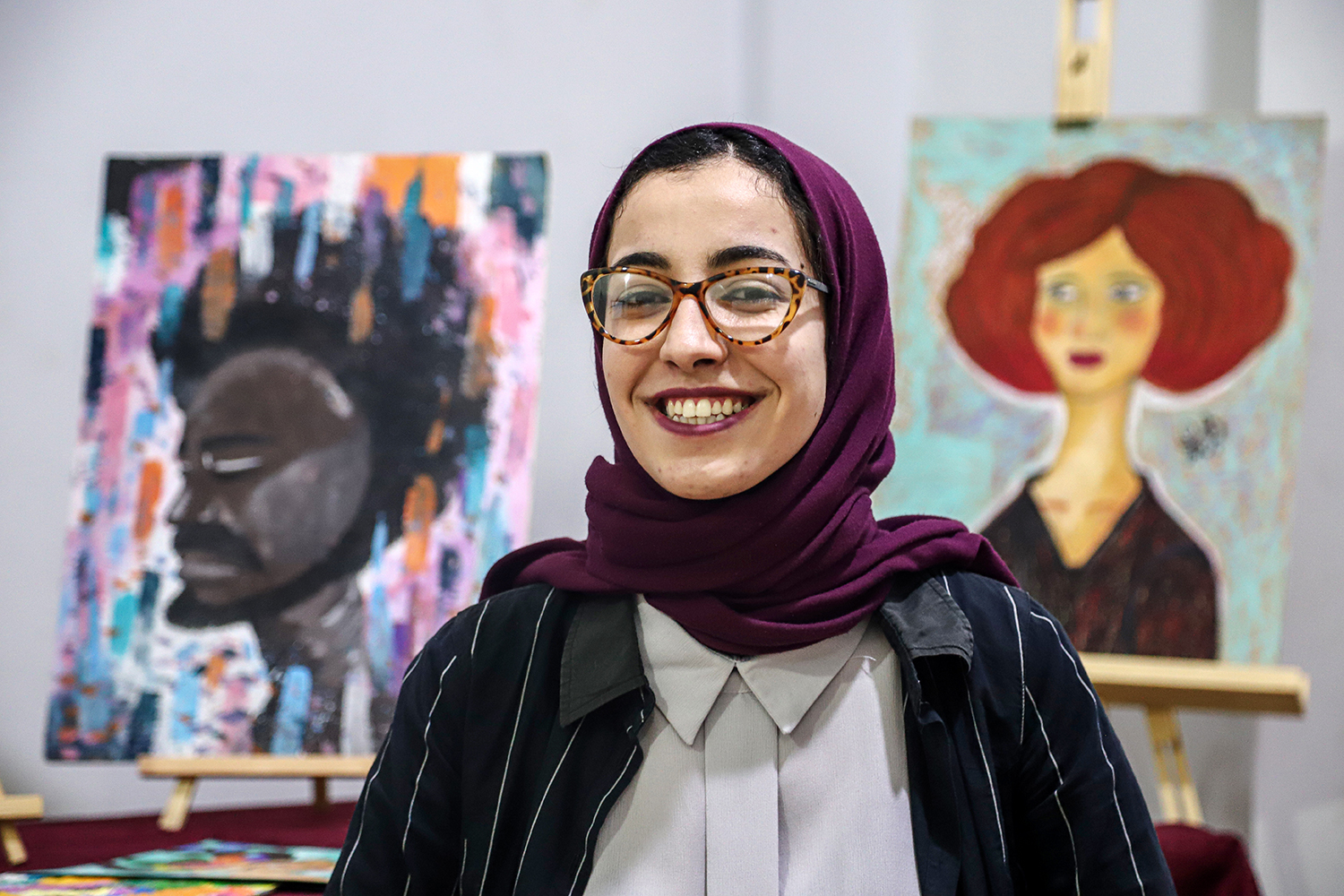
Farah Al-Ajla, founder of Joy Pieces, in Gaza in 2021.(Photo by Mohammed H. Salem / 2021)
From an experiment to a business
Joy Pieces became more than a place to sell handmade accessories. It was a project Farah developed through her own designs and the skills she acquired along the way. She learned to manage production, communicate with customers, promote her work and handle the practical demands of running a small business.
According to her professional profile, Farah managed Joy Pieces from February 2020 until September 2023. During that period, she created more than 400 designs and sold over 30,000 pieces, reaching customers inside and outside Gaza. She also took part in Palestinian handicrafts exhibitions.
Her interest in making things by hand extended beyond her own business. In February 2023, she trained children at Al-Amal Institute for Children in making accessories from recycled materials. The sessions gave them an opportunity to experiment with materials and develop their own ideas through practical work.
Photographs from that period show Farah concentrating on the details of her designs, arranging her tools and working with wire. Other images record her paintings and the experiments that came before Joy Pieces. Together, they preserve a chapter of her life in which she was building something of her own and making plans for what it might become.
Behind each finished accessory was work that could not always be seen in the final product: testing materials, revising designs, organising orders and learning how to reach customers. Farah was not simply making objects. She was gaining experience in turning an idea into a livelihood.
Then the war changed the circumstances in which she had built her life.
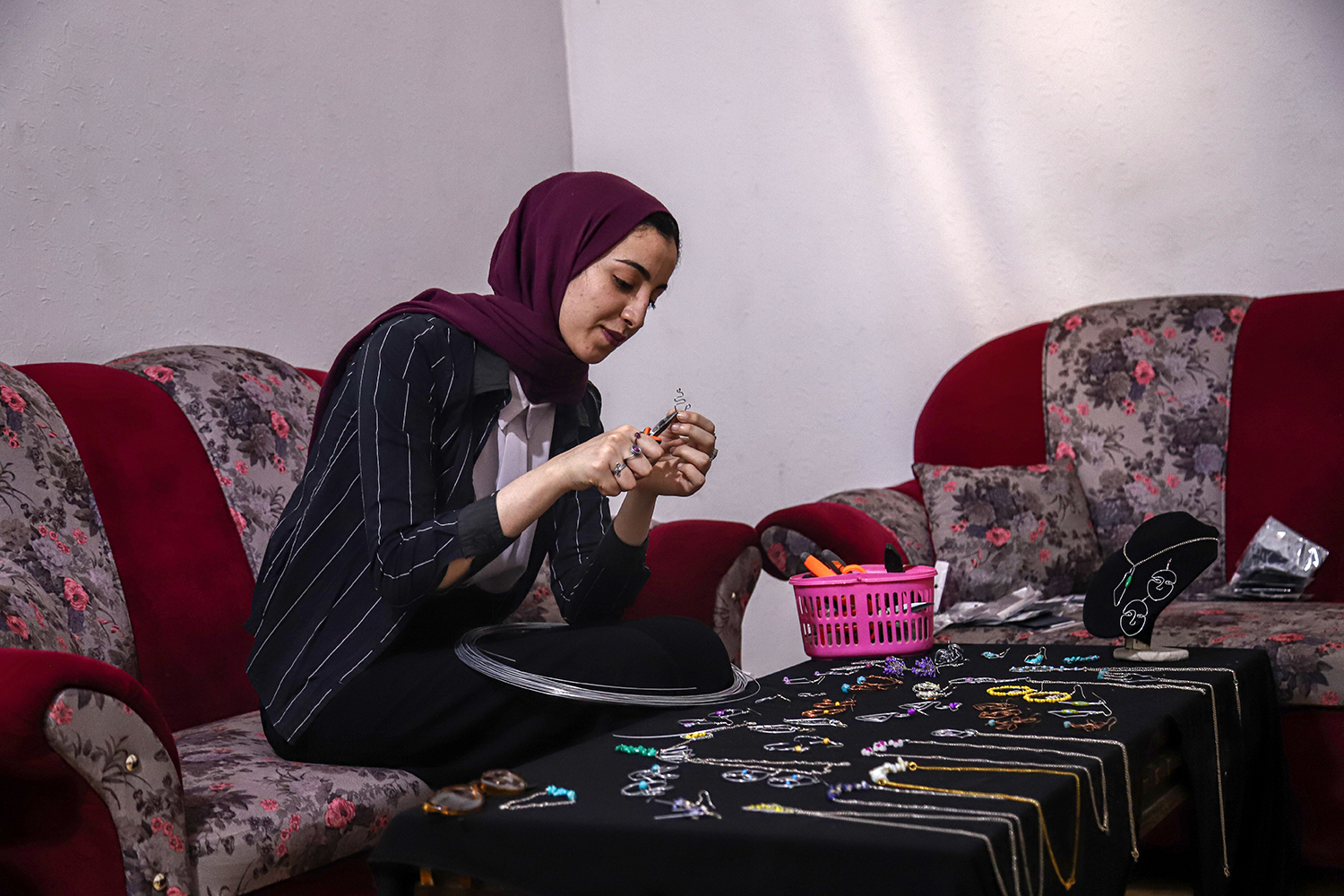
Farah working on handmade accessories from her home in Gaza.(Photo by Mohammed H. Salem / 2021)
When the conditions for work disappeared
War disrupted the routines and opportunities on which Farah’s business depended. A small creative enterprise requires more than an idea and the ability to make something. It needs materials, a place to work, access to customers, movement and a degree of stability that allows a person to plan ahead.
During the war, these ordinary requirements became difficult to maintain. The question was no longer simply how to develop another collection, but how to continue using her skills in circumstances that had changed dramatically.
Farah’s experience with Joy Pieces had given her practical knowledge that could be applied in other ways. During the war, she became involved with Gaza Talents, an initiative aimed at connecting Palestinian professionals with remote-work opportunities. Its focus differed from her accessories business, but it shared an interest in the skills people already possessed and the opportunities they needed to use them.
Remote work could not remove the dangers and restrictions of the war, or restore the stability that had been lost. But it offered a possible way for some Palestinians to connect their abilities with work beyond Gaza when conventional opportunities were limited.
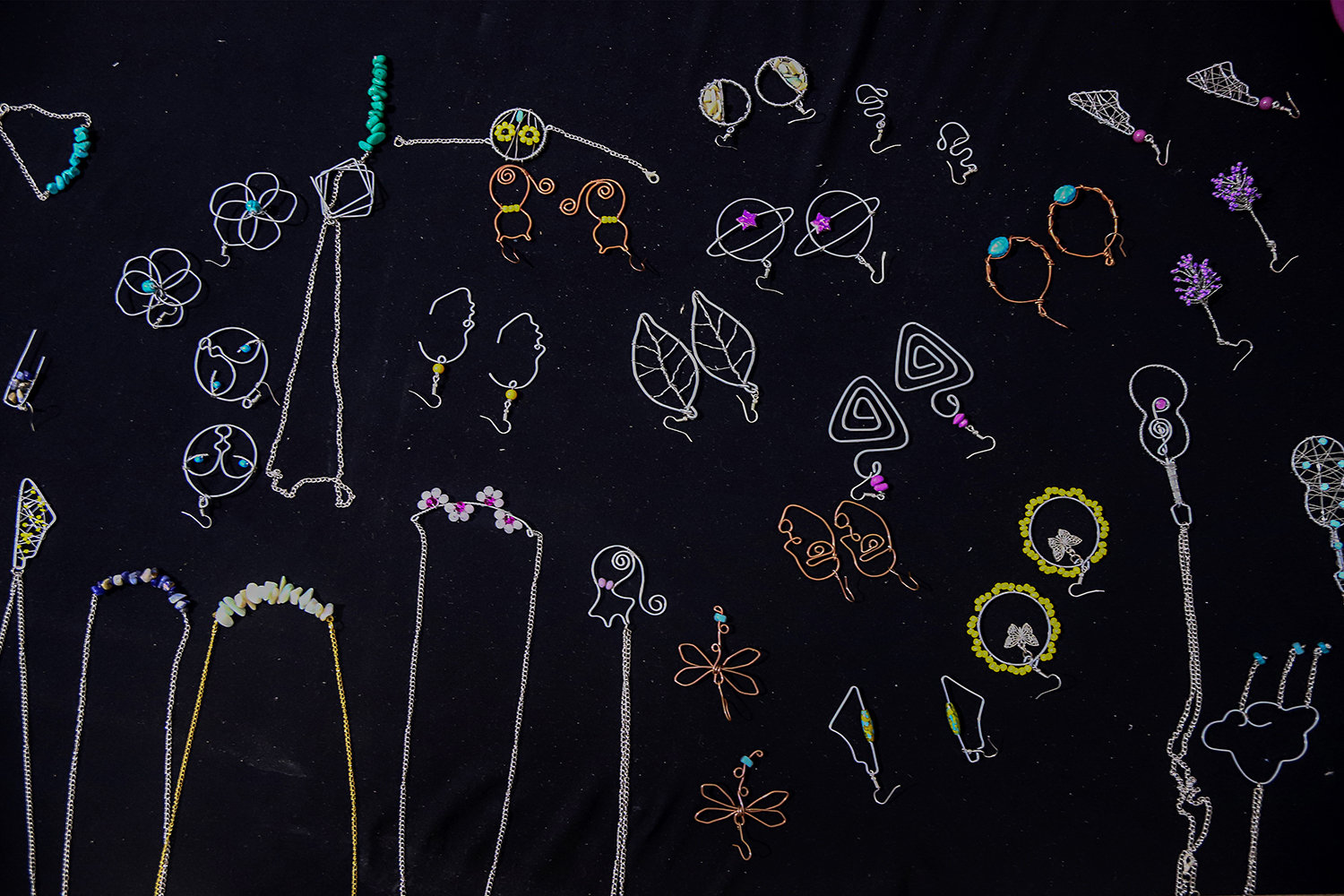
Handmade accessory designs created by Farah for her Joy Pieces business in Gaza.(Photo by Mohammed H. Salem / 2021)
For Farah, this marked a shift from concentrating on her own creative business to becoming involved in a wider effort to help Palestinians find professional opportunities. It was another chapter in a working life that had already required her to learn, experiment and adapt.
Today, Farah is married and lives in northern Gaza. Her present circumstances are different from those recorded in the photographs of her early work. The future of Joy Pieces remains uncertain, and it would be misleading to suggest that creativity or determination alone can overcome the conditions in which people in Gaza are living.
What can be seen clearly is what Farah had already built: the designs she created, the business she developed, the customers she reached and the skills she acquired. These are not minor details in a story about war. They are part of the life that existed before it, and part of the person she continues to be.
Farah’s story is not simply about losing a business and starting again. It is about a young woman who developed an idea into a livelihood, shared her skills with children and later looked for other ways to put her experience to use when the world around her changed. What comes next remains open.
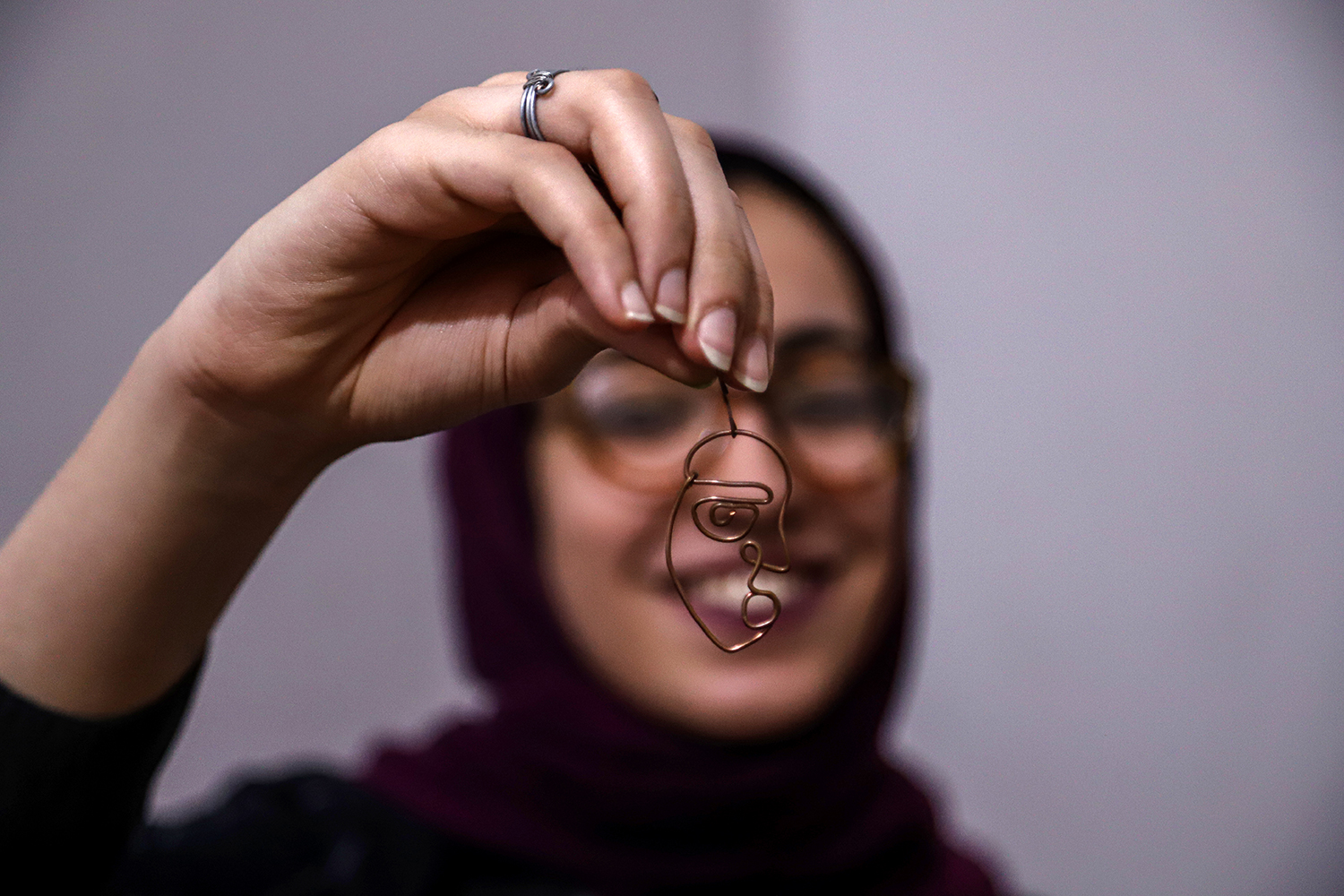
Farah holding one of the handmade wire accessories she created for her Joy Pieces business in Gaza.(Photo by Mohammed H. Salem / 2021)
You can find Farah’s “Joy Pieces” on Instagram here.
Islam Majd Al-Ayadi: From Injury to Listening
Before the war, Islam Majd Al-Ayadi had a clear sense of the direction she wanted her life to take. Originally from Al-Nuseirat in Gaza, she had graduated in psychological counselling from Al-Aqsa University. Her interest in psychology had begun in childhood and gradually developed into a professional ambition.
She worked, attended training, volunteered and spent time with friends by the sea. These were ordinary parts of a life that contained plans for the future. Islam wanted to work with people and help them understand what they were experiencing. She could not have known how closely that interest would later become connected to her own experience of injury, fear and recovery.
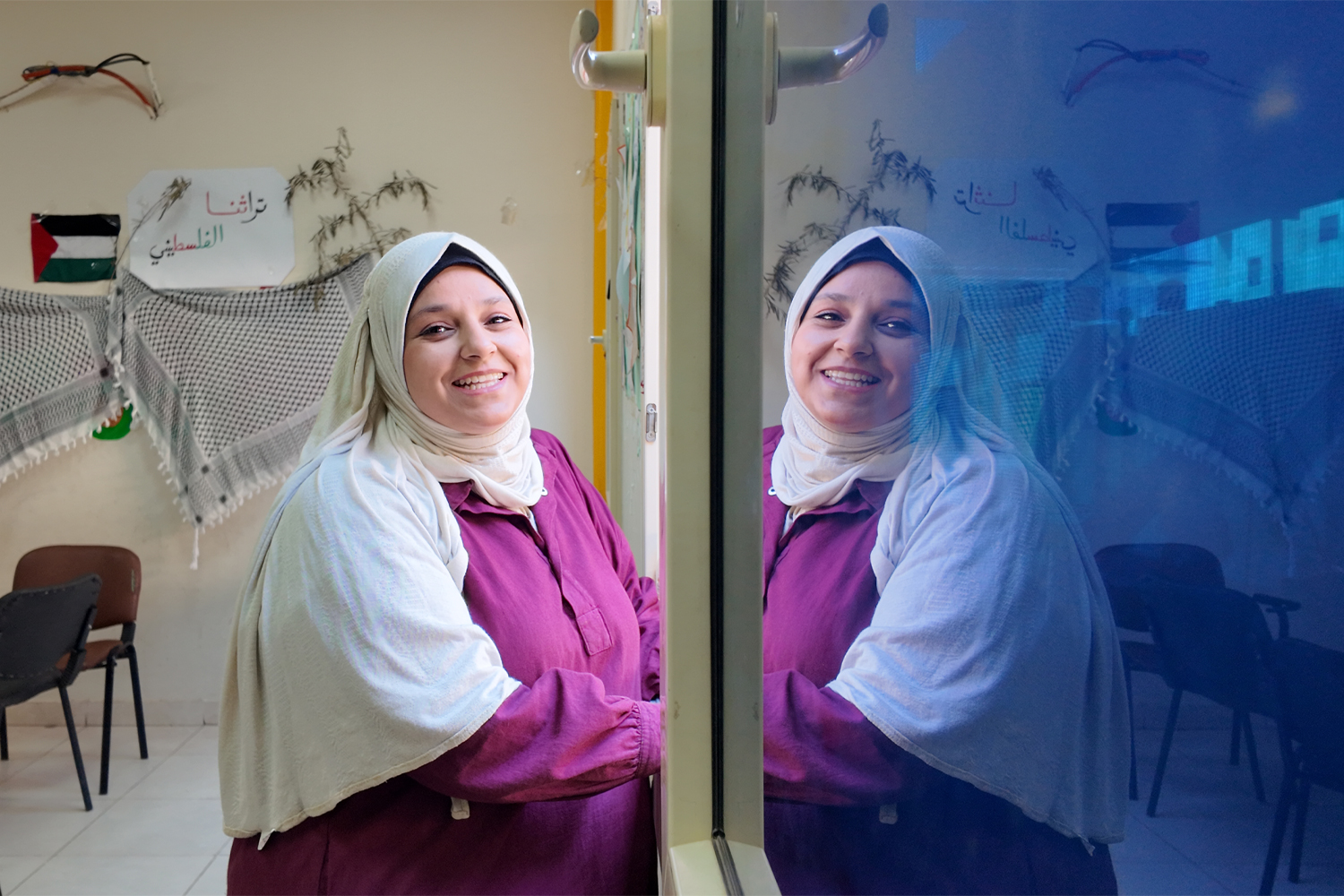
Islam Majd Al-Ayadi, a Palestinian psychological counsellor from Gaza, photographed in Cairo.(Photo by Mohammed H. Salem / 2026)
The night everything changed
At around two in the morning on 22 November 2023, Islam’s life changed during an attack in Gaza.
Her last clear memory before the injury was of sitting with her family. Later, she went to her room. As the bombardment intensified, she held a pillow and entrusted herself to God. What followed remained fragmented in her memory. She recalls being taken to hospital, her father trying to pull her from a car and a crowded corridor where a doctor warned her not to move because of the risk of paralysis.
Her injuries included fractures affecting her neck and spine, as well as injuries to her shoulder and ribs. The possibility of damage to her spinal cord made her condition particularly serious. Movement, which had once been an ordinary part of daily life, became uncertain.
Members of her family had also been injured. Before she could fully understand what had happened to her own body, Islam wanted to know whether they were alive. A doctor who knew her helped reassure her about her family before explaining the seriousness of her condition.
Her condition worsened in the weeks that followed. She became increasingly frightened as her spine began to curve and she faced the possibility that her injuries might leave her permanently disabled. Treatment outside Gaza became a possibility, but the transfer was delayed. Eventually, she was transferred to Egypt for further treatment and surgery.
The transfer gave her access to medical care, but it did not simply return her to the life she had known. Her injuries brought physical pain and uncertainty, while the separation from home and the continuing danger faced by people in Gaza added another layer to an already difficult experience.
During this period, faith became an important source of support. Islam repeated a prayer asking God to help her accept what had happened. But faith did not mean that fear disappeared or that she was always able to remain calm. She experienced moments of despair while waiting for treatment and wondering what her future would look like.
Her experience was not a straightforward journey from injury to recovery. It involved waiting, uncertainty and the difficult work of adjusting to a life that had changed without warning.
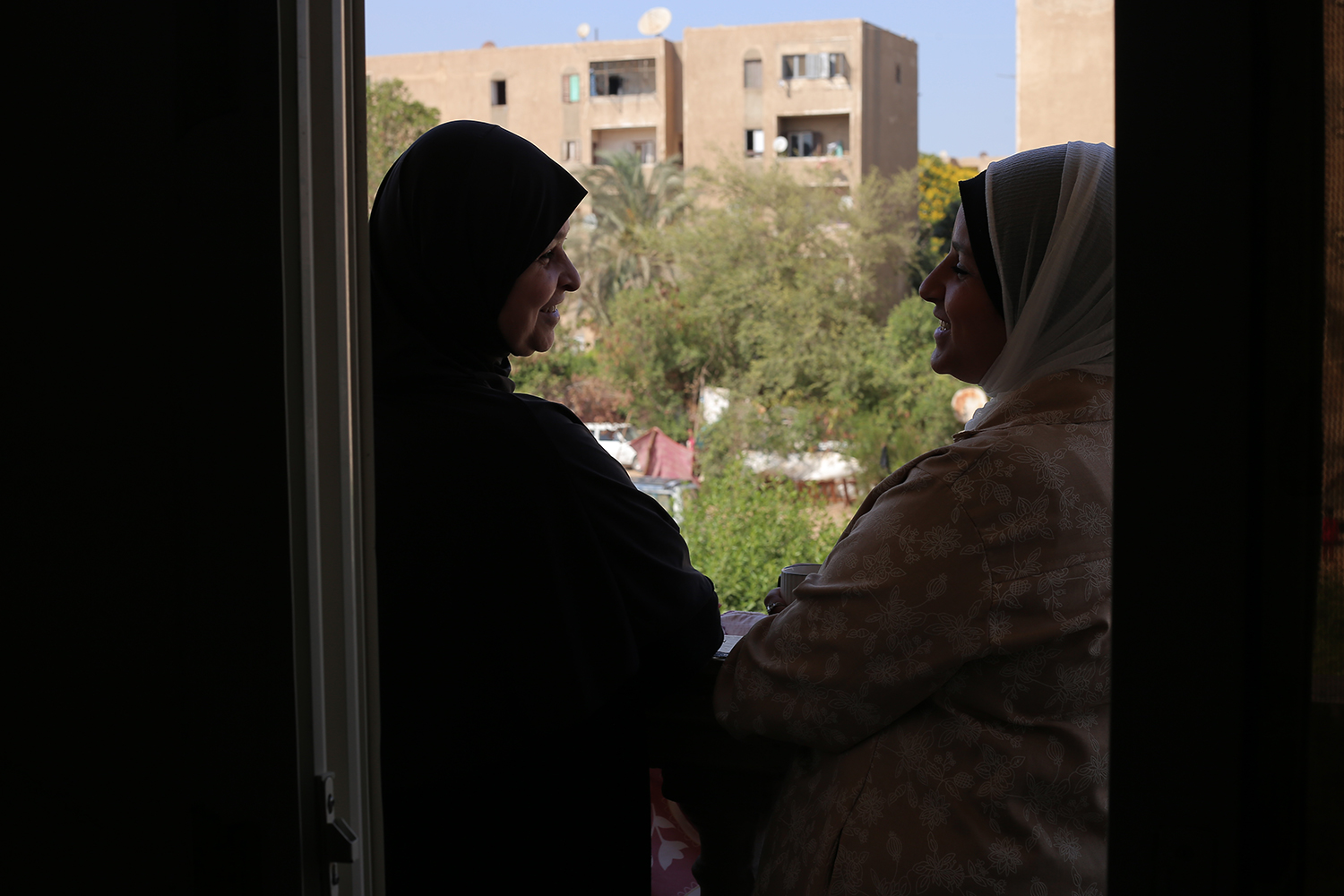
Islam Majd Al-Ayadi sits with her mother in their apartment in Cairo, Egypt.(Photo by Mohammed H. Salem / 2026)
Learning to listen
While she was still in hospital, Islam began supporting children from displaced families. One encounter stayed with her.
A child described frightening experiences while laughing and joking. Islam noticed that the child’s laughter did not seem to tell the whole story. The child’s eyes and body language suggested feelings that were not being expressed directly. Islam understood that the child needed someone who could listen without rushing to correct, question or reassure them.
The encounter helped her recognise how important it can be to create space for someone to speak in their own way, at their own pace. Sometimes support begins not with advice, but with listening carefully enough to notice what a person may be struggling to say.
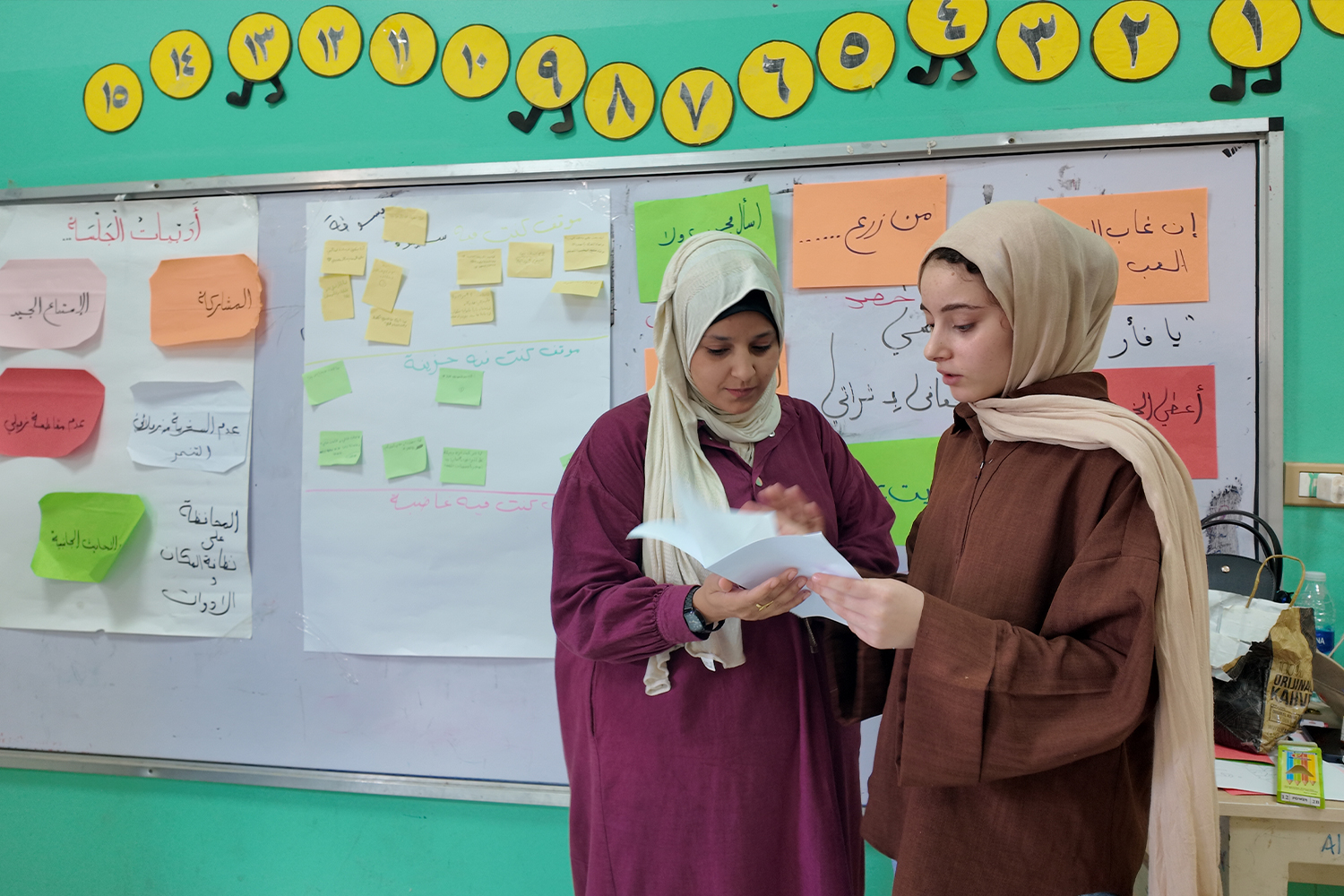
Islam Majd Al-Ayadi supporting a student during a psychosocial support session in Cairo, Egypt.(Photo by Mohammed H. Salem / 2026)
Later, after treatment and surgery, Islam experienced depression, anxiety and difficulties with sleep and eating. She realised that she, too, needed someone who could listen to her without making assumptions about how she should feel.
Words intended to comfort can sometimes have the opposite effect. Being told that she was fortunate to be in Egypt, for example, did not erase the pain of displacement, the loss of home and memories, or her fear for people who remained in Gaza. One person’s circumstances cannot be used to measure or dismiss another person’s suffering.
This became an important part of Islam’s understanding of psychological support. People do not always need comparisons or ready-made reassurances. They may need someone to take their experience seriously, without deciding in advance what it should mean.
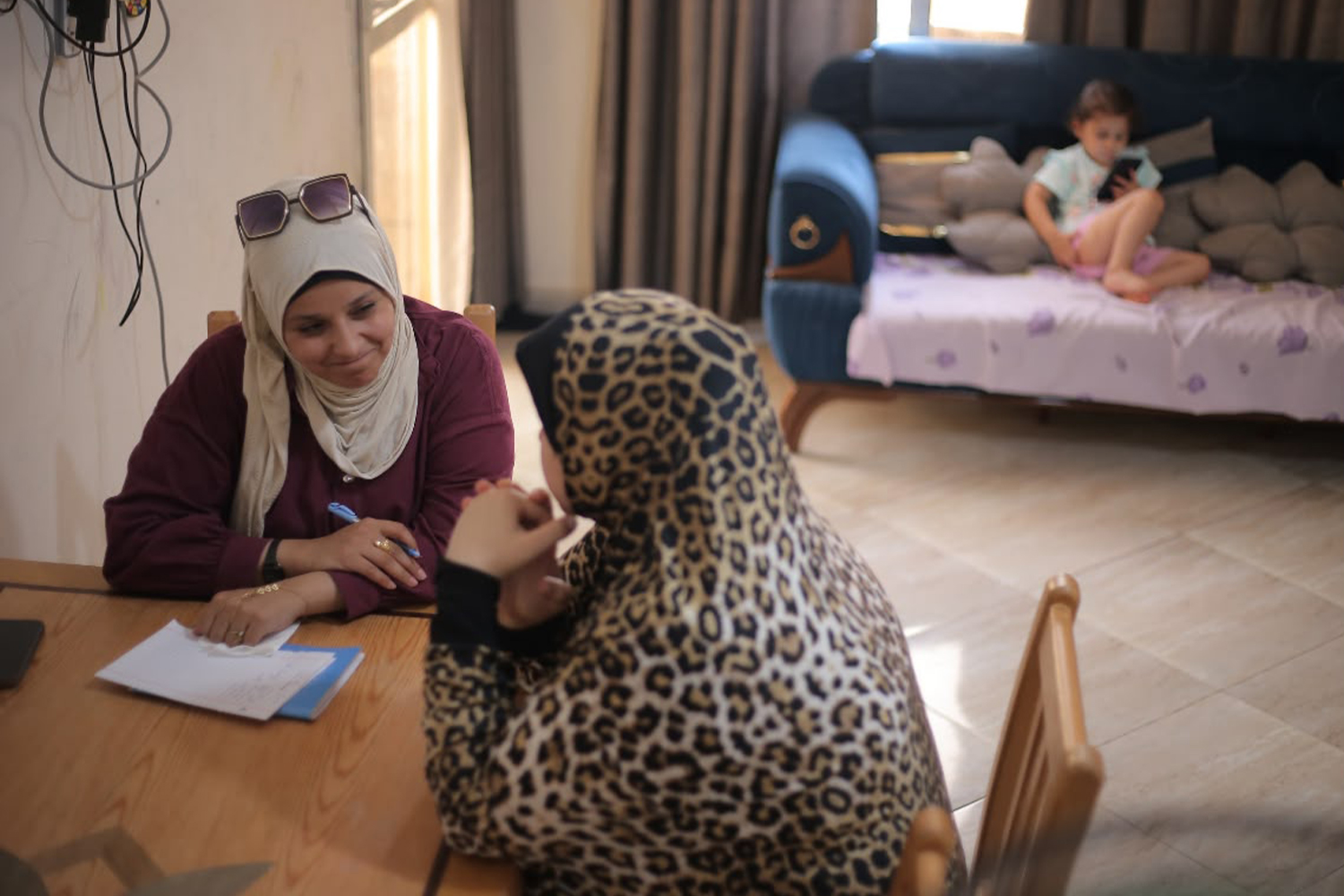
Islam Majd Al-Ayadi providing psychological support to a Palestinian woman in Cairo, Egypt.(Photo by Mohammed H. Salem / 2026)
Supporting others without denying her own experience
Today, Islam provides psychological support to Palestinian children and women in Egypt, including children who have come from Gaza. Her education gives her professional grounding, while her own experience has made her attentive to the different ways people express distress.
She does not assume that her experience is the same as that of everyone she meets. Some children have witnessed events she did not. Islam was injured early in the war and spent much of the following period in hospital, while other children survived bombardment, displacement and scenes no child should have to witness. Listening, she has learned, also means recognising the limits of one’s own experience.
The work is connected to the profession she had studied for before the war, but the path that brought her to it has been profoundly different from the one she imagined. She now supports others while continuing to live with the changes the war brought to her own life.
She has lost loved ones, including friends she considered sisters, as well as the familiarity of home and the memories attached to it. Writing, flowers and small activities that bring her pleasure have become ways of caring for herself. She tries to make room for her own feelings without forgetting that the people around her are also carrying pain.
Islam encourages children to hold on to hope and to look for possibilities, even when their circumstances are difficult. She has spoken of finding a way to make hope from pain. For her, this does not mean that pain disappears or that every loss can be repaired. It means that suffering does not have to be the only thing a person is allowed to express or the only part of their life that others see.
Her work with children and women is not separate from her own experience, but neither is it defined by it alone. She is a trained counsellor, a woman who was injured and treated far from home, and a person who continues to discover what it means to live with uncertainty while offering support to others.
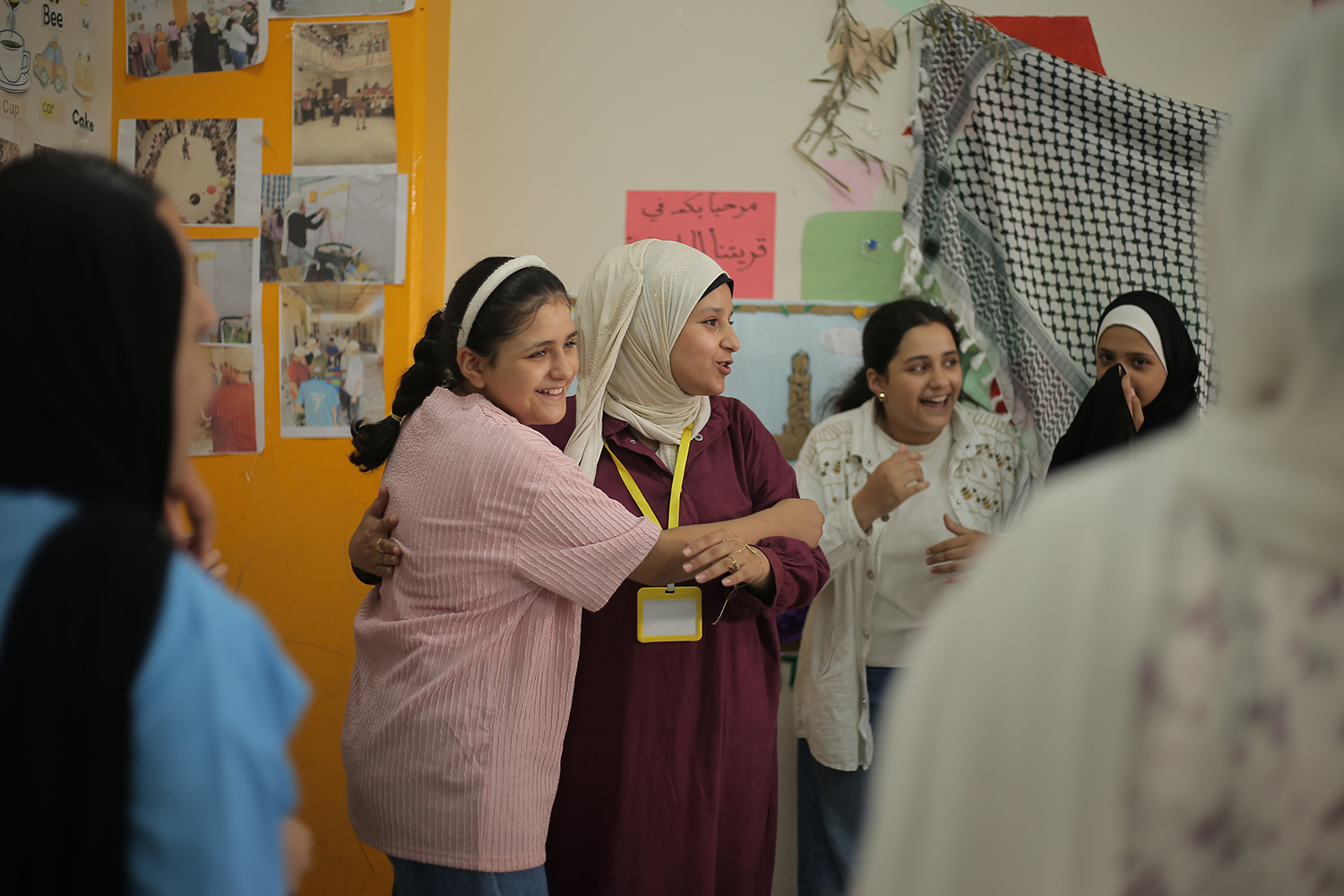
Islam Majd Al-Ayadi with Palestinian students from Gaza during a psychosocial support session in Cairo, Egypt.(Photo by Mohammed H. Salem / 2026)
Lives That Cannot Be Reduced to the War
Farah and Islam have followed different paths. One developed a creative business and learned how to turn handmade designs into a source of income. The other studied psychological counselling and, after a serious injury, began supporting children and women facing distress and displacement.
Their stories are connected by the ways their lives were interrupted, but they should not be made to fit a single narrative. Farah’s experience is not only a story about entrepreneurship under war, just as Islam’s is not only a story about injury and recovery. Each includes work, relationships, ambitions, difficult choices and a future that remains uncertain.
The history of Palestinian women is often told through their participation in public struggle, their work in communities and their efforts to sustain family life through periods of upheaval. Those contributions matter. But it is equally important to see women as individuals whose lives contain more than the socially prescribed roles they are expected to fulfil.
Farah’s designs and Islam’s work in psychological support are different forms of activity, shaped by different circumstances. Neither can undo what the war has taken away. Neither should be expected to turn hardship into an uplifting lesson for others.
What their stories offer is something quieter and more precise: a chance to see the lives that existed before the war, the changes that followed, and the ways each woman has continued to make choices within circumstances she did not choose.
To document Palestinian women is not only to record what they have endured. It is also to pay attention to what they create, what they learn, whom they care for, what they have lost and what remains unresolved. Their lives are part of Palestinian history, but they are also their own—individual stories that deserve to be seen in their full complexity.
Writerこの記事を書いたのは
Writer
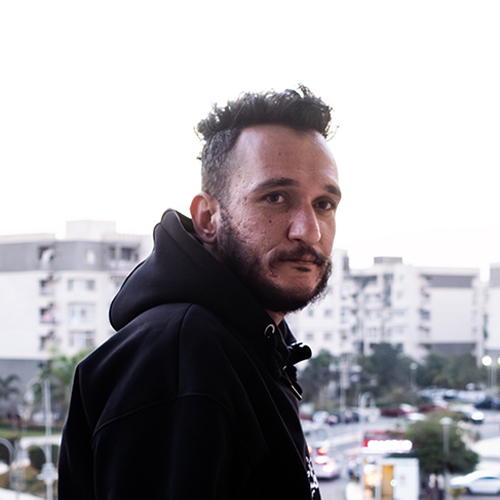
写真家モハンメド・H・サレムMohammed H Salem
パレスチナ・ガザ地区出身の写真家。様々な写真エージェンシーと協働するほか、プラットフォーム「Untold Palestine」の共同創設者の一人でもある。その作品は、国内外の多くの雑誌やメディアで発表されている。また、フリーランスとして「アルジャジーラ・イングリッシュ」とも提携している。
あわせて読みたい・聴きたい
本記事の取材・執筆や、本サイトに掲載している国内外の取材、記事や動画の発信などの活動は、みなさまからのご寄付に支えられています。
これからも、世界の「無関心」を「関心」に変えるために、Dialogue for Peopleの活動をご支援ください。
寄付で支えるメールマガジンに登録しませんか?
新着コンテンツやイベント情報、メルマガ限定の取材ルポなどをお届けしています。

 佐藤慧
 安田菜津紀
 D4P取材班